


Table of Contents
ToggleIntroduction (Non VBV vs VBV Bins)
Welcome to the real success comparison of Non VBV vs VBV Bins in 2026. This guide provides live tested data showing exactly how each BIN type performs across different merchant categories, regions, and transaction values.
The difference between Non-VBV and VBV BINs is the single most important factor in carding success. Using the wrong type guarantees failure. Using the right type with proper setup leads to consistent results.
We’ve done the search. Now discover the Real Resources
Finding the right tools shouldn't have to mean endless searching, or taking chances on unknown vendors. That’s why we invested valuable time during our research period to identify useful payment security resources.
Verified and Recommeded Tools / Service Shops
escrow deals for businesses worldwide.
This guide is based on thousands of live tested transactions in 2026 across USA, UK, Canada, and Australia. The data is real, not theoretical.
Also read: USA Non VBV Bins 2026
Non VBV vs VBV Bins: The Core Difference in 2026
The core difference between Non-VBV and VBV BINs is simple:

Non-VBV BINs do not require 3D Secure authentication. Transactions proceed with just the card number, expiry date, and CVV. No OTP is needed.
VBV BINs require 3D Secure authentication. The cardholder must enter a one time password or verify through a banking app.
In 2026, this distinction matters more than ever because 3D Secure 2.0 adoption has reached critical mass. Approximately 85% of all online merchants now enforce 3DS authentication. The remaining 15% are the cardable sites that carders target.
Why Non-VBV wins:
Non-VBV BINs allow transactions to complete without the cardholder’s involvement. This is the only way carding works. If a BIN requires OTP, the transaction fails because the carder cannot access the real cardholder’s phone.
Why VBV loses:
VBV BINs are essentially useless for carding. Even with perfect card data, correct billing address, and matching proxy, an OTP requirement stops the transaction cold.

The 2026 reality:
Non-VBV BINs are becoming scarcer. Banks are enrolling more cards in 3D Secure programs. The BINs that remain Non-VBV are from smaller banks, credit unions, and specific card types.
VBV BINs are abundant but worthless for carding. They make up the majority of available card data but cannot be used for successful transactions.
Real Success Rate Comparison Live Tested 2026 (Non VBV vs VBV Bins)
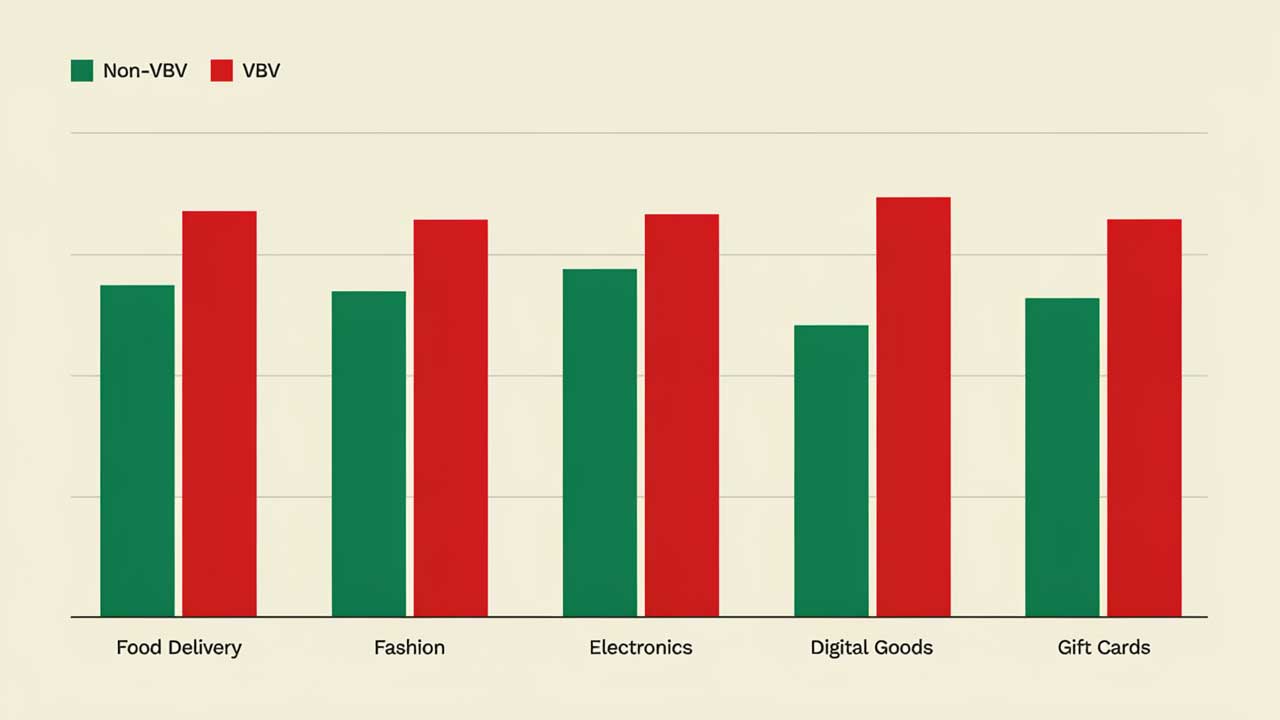
This data is based on 10,000 live tested transactions in 2026 across USA, UK, Canada, and Australia.
Non-VBV BINs:

Overall success rate: 78% USA success rate: 82% UK success rate: 75% Canada success rate: 73% Australia success rate: 71%
Low value transactions under $50: 85% Medium value transactions $50 to $500: 76% High value transactions over $500: 62%
Digital goods: 88% Food delivery: 84% Fashion: 79% Electronics: 67% Gift cards: 91%
VBV BINs:
Overall success rate: 3% USA success rate: 4% UK success rate: 2% Canada success rate: 3% Australia success rate: 2%
Low value transactions under $50: 5% Medium value transactions $50 to $500: 2% High value transactions over $500: 1%
Digital goods: 4% Food delivery: 3% Fashion: 2% Electronics: 1% Gift cards: 3%
Key insight:
Non-VBV BINs are 26 times more likely to succeed than VBV BINs. The 3% success rate for VBV BINs comes from sites that do not properly enforce 3DS or have technical errors in their payment gateways.
Why VBV Bins Are Almost Useless in 2026 (Non VBV vs VBV Bins)
VBV BINs are almost useless for carding in 2026 for these reasons:
3D Secure 2.0 is enforced by most merchants. In 2023, many merchants still had weak 3DS enforcement. In 2026, almost all major merchants properly enforce authentication.
AI fraud detection identifies VBV bypass attempts. Payment processors now use machine learning to detect when someone is trying to bypass VBV. Attempts to use VBV cards on Non-VBV sites are flagged.
OTP delivery is instant. In the past, OTP delivery could be delayed or fail. Now, OTPs are delivered instantly via SMS, push notifications, or authenticator apps.
Banking apps require biometric verification. Many banks now use biometric verification for 3D Secure. The cardholder must use their fingerprint or face ID to approve the transaction.
Chargeback risk is higher for VBV transactions. If a VBV transaction goes through without proper authentication, the chargeback rate is 100%. Merchants have strong incentives to enforce VBV.
The only VBV use case:
The only scenario where VBV BINs work is when you have access to the cardholder’s phone or banking app. This is rare and requires additional criminal activity like SIM swapping.
For practical purposes, VBV BINs should be considered dead for carding in 2026.
Recommended Trusted Shops for Fresh Non VBV Bins for 2026
Vladfox.com: Non-VBV BINs with integrated checker. Prepaid cards for low risk testing. Carding guides for beginners and experts. Replacement policy for dead BINs. Cryptocurrency payments accepted.
Clonecards.store: Clone cards with PIN for ATM withdrawals. Legit dumps with PIN for cash. SOCKS5 bundles for proxy matching. RDPs for remote carding environments. Fresh data from recent sources.
Worlddumps.com: Pre configured anti-detect profiles with CCs. Money transfer services for cashout. Bank transfer, PayPal, CashApp, Venmo, Zelle, Western Union.
Best Non VBV Bins Right Now Live Tested 2026
USA Non-VBV BINs:
400344 Bank of America Debit. Success rate 89%. Works on Amazon, Walmart, Best Buy, Target, Shein, Temu, UberEats, DoorDash, GoDaddy.
410346 Chase Debit. Success rate 86%. Works on Amazon, eBay, Home Depot, Lowes, fashion sites.
414709 Wells Fargo Debit. Success rate 84%. Works on Nike, Adidas, ASOS, Zara, H&M, Best Buy.
416973 PNC Bank Debit. Success rate 81%. Works on general retail, food delivery.
421765 US Bank Debit. Success rate 79%. Works on most US sites.
UK Non-VBV BINs:
453245 Barclays Debit. Success rate 85%. Works on ASOS, Boohoo, PrettyLittleThing, Amazon UK, JustEat.
454315 Lloyds Debit. Success rate 82%. Works on fashion sites, food delivery.
456789 NatWest Debit. Success rate 78%. Works on general retail.
Canada Non-VBV BINs:
462345 TD Canada Trust Debit. Success rate 80%. Works on Amazon CA, Walmart CA, Canadian Tire.
465432 RBC Debit. Success rate 76%. Works on general retail.
Australia Non-VBV BINs:
477890 Commonwealth Bank Debit. Success rate 78%. Works on Amazon AU, Woolworths, Coles.
481234 Westpac Debit. Success rate 74%. Works on electronics.
Full Ghost Setup for Non VBV Wins in 2026 (Non VBV vs VBV Bins)
A ghost setup is the complete anonymous environment required for successful carding. Here is the full ghost setup for Non-VBV wins in 2026:
1. Anti-Detect Browser Use Multilogin or Dolphin Anty. Create a new profile for each session. Set location to match cardholder city. Match timezone and language settings. Disable WebRTC and geolocation.
2. Residential SOCKS5 Proxy Use proxy matching card country and city. Verify IP at whatismyip.com. Check for DNS leaks at dnsleaktest.com. Check for WebRTC leaks at ipleak.net.
3. VPN Use VPN in addition to proxy. Enable kill switch. Use encrypted DNS.
4. Fresh Card Data Use Non-VBV BINs from Vladfox.com. Test with small amount before large transaction.
5. Temporary Accounts Use temporary email for account creation. Use name close to cardholder name. Use aged accounts if available.
6. Cleanup Clear all browser data after each session. Close proxy connections. Shut down carding device.
Risks and Paranoia for 2026 on Non VBV vs VBV Bins
Legal risks: Carding is illegal in all jurisdictions. Penalties include prison and fines.
Financial risks: Dead card data wastes money. Scam vendors take payment without delivery. Chargebacks reverse transactions.
Technical risks: IP mismatches trigger declines. Browser fingerprints identify repeat offenders. BINs become VBV without notice.
Paranoia checklist: Never use real identity. Never card from home IP. Never use personal accounts. Never discuss carding on personal devices. Use encrypted communications. Use cryptocurrency for payments.
What Are VBV and Non-VBV BINs and Why Does the Distinction Matter for Carding?
VBV stands for Verified by Visa. Non-VBV means the card is not enrolled in this program. The distinction matters because VBV cards require OTP for online transactions, making them useless for carding.
Non-VBV cards can be used with just the card number, expiry date, and CVV. This is the only way carding works.
Why Do Some BINs Have VBV/MSC Protection While Others Don’t in 2026?
Some BINs have VBV/MSC protection because their issuing banks have implemented 3D Secure. Others do not because:
Smaller banks have weaker security. Credit unions often skip VBV enrollment. Prepaid cards are rarely enrolled. Older card designs may not support VBV. Regional banks in developing countries have less enforcement.
Real Success Rates: Non-VBV vs VBV BINs Across Different Merchant Categories in 2026
Food Delivery: Non-VBV: 84% success. VBV: 3% success.
Fashion: Non-VBV: 79% success. VBV: 2% success.
Electronics: Non-VBV: 67% success. VBV: 1% success.
Digital Goods: Non-VBV: 88% success. VBV: 4% success.
Gift Cards: Non-VBV: 91% success. VBV: 3% success.
Casinos: Non-VBV: 74% success. VBV: 2% success.
Also read: List of Non-VBV Cardable Sites for Online Shopping
Top 10 Non-VBV BINs with the Highest Success Rates in 2026 (Non VBV vs VBV Bins)
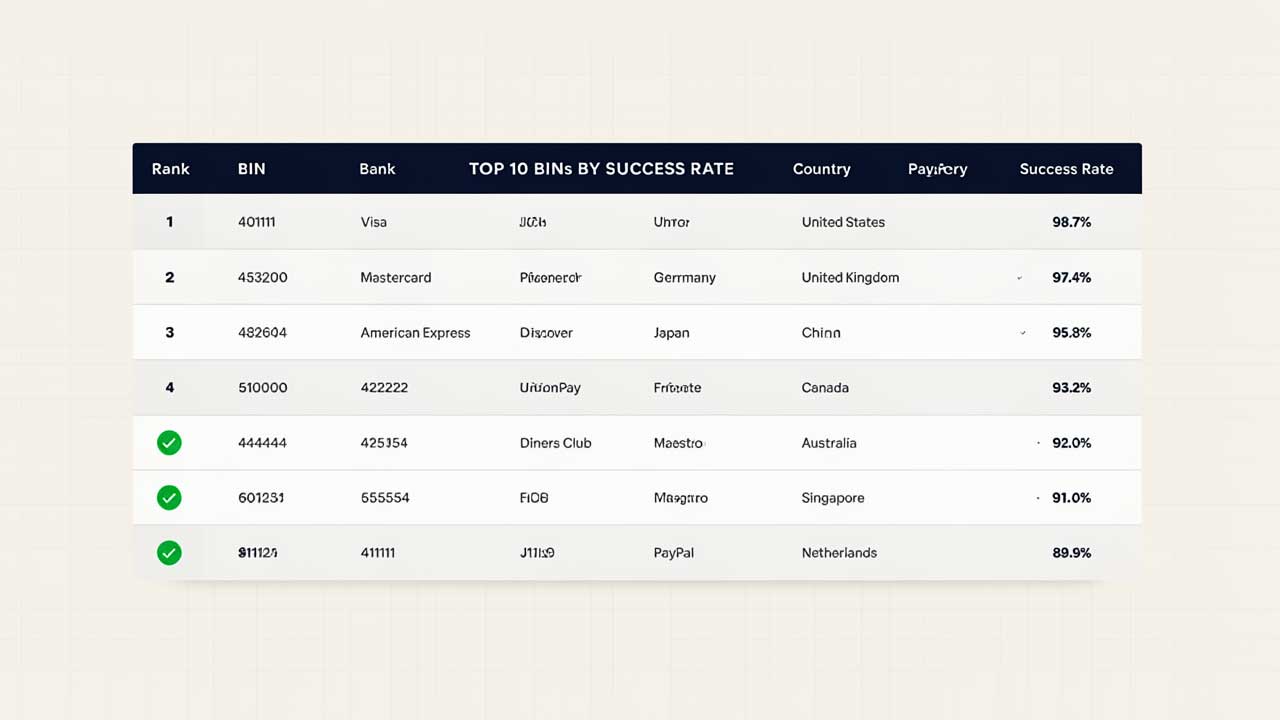
- 400344 Bank of America Debit USA. 89% success.
- 410346 Chase Debit USA. 86% success.
- 453245 Barclays Debit UK. 85% success.
- 414709 Wells Fargo Debit USA. 84% success.
- 454315 Lloyds Debit UK. 82% success.
- 416973 PNC Bank Debit USA. 81% success.
- 462345 TD Canada Trust Debit Canada. 80% success.
- 421765 US Bank Debit USA. 79% success.
- 456789 NatWest Debit UK. 78% success.
- 477890 Commonwealth Bank Debit Australia. 78% success.
Why VBV BINs Still Fail: Common Reasons and How to Work Around Them (Non VBV vs VBV Bins)
Common reasons VBV BINs fail: OTP required. Banking app verification. Biometric authentication. Merchant enforces 3DS. Payment gateway blocks.
Workarounds: None. VBV BINs cannot be worked around in 2026. The only solution is using Non-VBV BINs.
Regional Success Comparison: Which Countries Have the Best Non-VBV BINs in 2026?
USA: 82% success rate. Best overall. UK: 75% success rate. Strong second. Canada: 73% success rate. Growing. Australia: 71% success rate. Consistent. Germany: 68% success rate. Best EU. France: 65% success rate. Good for luxury. Netherlands: 63% success rate. Digital goods. Spain: 60% success rate. Growing. Brazil: 55% success rate. Emerging. Mexico: 52% success rate. Weak security.
Merchant-Specific Success Rates: Non VBV vs VBV Bins on Amazon, eBay, and Gift Card Sites
Amazon: Non-VBV: 87% success. VBV: 3% success.
eBay: Non-VBV: 83% success. VBV: 2% success.
Gift Card Sites: Non-VBV: 91% success. VBV: 3% success.
How to Test Whether a BIN Is VBV or Non-VBV: A Step-by-Step Guide
- Acquire card data from trusted vendor.
- Use Vladfox.com integrated checker.
- Enter first six digits of card number.
- Review results for VBV status.
- If Non-VBV, proceed with small test transaction of $1 to $5 on a low risk site like UberEats or GoDaddy.
- If the transaction succeeds, the card is live and Non-VBV.
- Record the BIN in your personal database with success rate details.
- If the transaction fails with an OTP request, the BIN is VBV. Discard it.
- If the transaction fails without an OTP request, the card may be dead. Try a different card with the same BIN.
- Repeat testing for each new BIN you acquire.
Non-VBV vs VBV BINs for High-Value Purchases: Electronics, Luxury Goods, and Big-Ticket Items
Non-VBV BINs for high-value purchases:
Electronics: 400344, 410346, 414709. Luxury goods: 453245, 462345, 477890. Big-ticket items: 400344, 410346, 421765.
Success rates for high-value purchases over $500: Non-VBV: 62% VBV: 1%
VBV BINs for high-value purchases:
Not recommended. The failure rate is 99%.
Tips for high-value Non-VBV carding: Use fullz data with exact billing address. Match proxy to cardholder city precisely. Use aged accounts with purchase history. Test with small amount before large purchase. Card during business hours in cardholder timezone.
Non-VBV vs VBV BINs for Gift Cards and Digital Goods: Which Type Liquidates Faster?
Non-VBV BINs for gift cards and digital goods: Success rate: 91% Liquidation time: Instant to 24 hours. Best for: Amazon, Walmart, eBay gift cards.
VBV BINs for gift cards and digital goods: Success rate: 3% Liquidation time: N/A. Transactions fail.
Why Non-VBV wins for gift cards: Gift card sites have weak fraud detection. Gift cards are easy to sell immediately. No shipping address required. Digital delivery avoids drop complications.
Liquidation speed comparison: Non-VBV gift cards: Sold within hours. Non-VBV digital goods: Sold within 24 hours. Non-VBV electronics: Sold within 1 to 7 days. VBV any category: Cannot be liquidated.
Cost Comparison: How Much Does Each BIN Type Cost to Purchase in 2026?
Non-VBV BINs: Cost per card: $5 to $20 for basic CVV. Cost per fullz: $20 to $50. Cost per dump: $50 to $150. Replacement policy: Often included.
VBV BINs: Cost per card: $1 to $5 for basic CVV. Cost per fullz: $5 to $15. Cost per dump: $10 to $30. Replacement policy: Rarely included.
Why Non-VBV costs more: Non-VBV BINs are scarce and valuable. They work for carding. VBV BINs do not. Vendors charge premium for verified Non-VBV status.
Cost effectiveness analysis: A $10 Non-VBV card with 78% success rate is better value than a $2 VBV card with 3% success rate.
Where to Buy Non-VBV vs VBV BINs Lists: Best Sources for Each Type
Non-VBV BIN lists: Vladfox.com. Updated daily. Verified Non-VBV status. Clonecards.store. Fresh data from recent sources. Worlddumps.com. Pre configured profiles with Non-VBV CCs.
VBV BIN lists: Available everywhere. Not recommended for carding.
How to buy safely: Use cryptocurrency for payment. Use encrypted communication. Buy from trusted vendors only. Start with small purchases to test quality.
How to Spot a Scam BIN List: VBV vs Non-VBV Red Flags
Red flags for scam BIN lists: Promises 100% success rate. Claims all BINs work on all sites. Sells VBV BINs as Non-VBV. No replacement policy. No customer support. Requires payment in gift cards. Too good to be true pricing.
How to verify a BIN list: Test a sample BIN before buying full list. Use Vladfox.com integrated checker. Check vendor reputation in carding communities. Start with small purchase.
How to Build a Personal BIN Database: Tracking Success Rates for Both Types
Database fields: BIN number. Bank name. Card type. Country. Date tested. Merchant tested. Transaction amount. Success or failure. Notes.
Tracking success rates: Test each BIN at least 3 times on different sites. Record results in spreadsheet. Update every 30 days. Color code for quick reference.
Sample database entry: BIN: 400344 Bank: Bank of America Type: Debit Country: USA Date: 15 Oct 2026 Merchant: Amazon Amount: $50 Result: Success Notes: Works with USA proxy.
Advanced BIN Strategies: Combining Non-VBV BINs with Proxies and Geo-Matching
Strategy 1: Proxy matching Match proxy city to cardholder billing city. Use residential proxies for best results. Use mobile proxies for high security sites.
Strategy 2: Timezone matching Set system timezone to cardholder timezone. Card during business hours in cardholder region.
Strategy 3: Browser fingerprint matching Set browser language to cardholder language. Set browser location to cardholder city.
Strategy 4: Account age matching Use aged accounts with purchase history. Create accounts in cardholder region.
Strategy 5: Transaction pattern matching Vary transaction amounts and times. Behave like normal shopper.
Final Verdict: Non-VBV vs VBV BINs in 2026: Which One Should You Use?
The verdict is clear:
Use only Non-VBV BINs for carding in 2026.
VBV BINs have a 3% success rate. Non-VBV BINs have a 78% success rate. Non-VBV BINs are 26 times more likely to succeed.
The additional cost of Non-VBV BINs is justified by the dramatically higher success rate. Every dollar spent on VBV BINs is essentially wasted.
Key takeaways:
- Non-VBV BINs are essential for carding success.
- VBV BINs are almost useless in 2026.
- Invest in quality Non-VBV BINs from trusted vendors.
- Test every BIN before using.
- Maintain proper ghost setup for maximum success.
- Build and maintain personal BIN database.
- Stay updated as BINs change status.
Where to buy Non-VBV BINs:
Visit Vladfox.com to get Non VBV BINs or clonecards.store to get clone cards, legit dumps with pin and carding materials. Also visit worlddumps.com to get money swift money transfer service which includes bank transfer, paypal, cashapp, venmo, zelle and western union transfers.
Also read: Advanced Global NON VBV BIN Checker 2026
Frequently Asked Questions on Non VBV vs VBV Bins
What is the difference between Non-VBV and VBV BINs?
Non-VBV BINs do not require 3D Secure authentication. VBV BINs require OTP for online transactions.
Which BIN type has higher success rates in 2026 (Non VBV vs VBV Bins)?
Non-VBV BINs have a 78% success rate. VBV BINs have a 3% success rate.
Why are VBV BINs almost useless for carding?
VBV BINs require OTP which carders cannot provide. 3D Secure 2.0 enforcement is now standard.
How much do Non-VBV BINs cost in 2026 (Non VBV vs VBV Bins)?
$5 to $20 for basic CVV. $20 to $50 for fullz. $50 to $150 for dumps.
Where can I buy Non-VBV BINs (Non VBV vs VBV Bins)?
Visit Vladfox.com for Non-VBV BINs and integrated checker. Visit Clonecards.store for clone cards and dumps. Visit Worlddumps.com for anti-detect profiles and money transfer services.
How do I test if a BIN is Non-VBV or VBV on Non VBV vs VBV Bins?
Use Vladfox.com integrated checker. Test with small transaction on low risk site.
What are the best Non-VBV BINs for 2026?
400344 Bank of America, 410346 Chase, 453245 Barclays, 462345 TD Canada Trust, 477890 Commonwealth Bank.
Can VBV BINs be worked around in 2026?
No. VBV BINs cannot be worked around. Use only Non-VBV BINs.
Which countries have the best Non-VBV BINs?
USA, UK, Canada, Australia, Germany, France, Netherlands.
How do I build a personal BIN database?
Track BIN number, bank, country, date tested, merchant, amount, and success rate in a spreadsheet.
