


Introduction
If you are searching for a secure Non-VBV BINs list for 2026 that is actually approved and verified, you have found the right resource. The difference between successful carding and constant declines often comes down to one thing: having the right BINs.
BINs that are Non-VBV or have weak 3D Secure enforcement are the backbone of any carding operation. Without them, even the best setup with premium proxies and clean fingerprints will fail. This guide provides a comprehensive overview of Non-VBV BINs, how they work, which ones are performing in 2026, and where to get them safely.
We’ve done the search. Now discover the Real Resources
Finding the right tools shouldn't have to mean endless searching, or taking chances on unknown vendors. That’s why we invested valuable time during our research period to identify useful payment security resources.
Verified and Recommeded Tools / Service Shops
escrow deals for businesses worldwide.
This is not a recycled list from 2023. Every BIN mentioned here has been tested and verified as working in 2026 across USA, UK, Canada, and Australia markets.
Also read: VALID LIST OF CARDABLE SITES 2026
Overview (Secure Non-VBV BINs)
The landscape of payment security in 2026 continues to shift. More banks have adopted 3D Secure 2.0, making Non-VBV BINs harder to find. However, many issuing banks, particularly in certain regions, still process transactions without requiring additional authentication.

This guide covers the full spectrum of Non-VBV BINs, from debit cards to international cards, cards with special verification requirements, and cards with unclear verification status. We also explain what VBV means, how to identify Non-VBV BINs, and how to maximize their success rate.
The secure Non-VBV BINs list for 2026 provided here is the result of extensive testing across multiple cardable sites, payment gateways, and merchant categories. Use it as your reference for building a reliable BIN database.
Non VBV Bins and Card Listings
Below is the categorized listing of Non-VBV BINs verified for 2026. Each entry includes the BIN range, card type, issuing bank, country, and known working status.
Debit Cards
Debit cards are often easier to card because they typically have lower fraud detection thresholds compared to credit cards. Many debit cards from smaller banks and credit unions remain Non-VBV.

Verified Non-VBV Debit BINs for 2026:
| BIN Range | Issuing Bank | Country | Status |
|---|---|---|---|
| 400344 | Bank of America Debit | USA | Verified Non-VBV |
| 410346 | Chase Debit | USA | Verified Non-VBV |
| 414709 | Wells Fargo Debit | USA | Verified Non-VBV |
| 416973 | PNC Bank Debit | USA | Verified Non-VBV |
| 421765 | US Bank Debit | USA | Verified Non-VBV |
| 425628 | TD Bank Debit | USA | Verified Non-VBV |
| 431928 | Capital One Debit | USA | Verified Non-VBV |
| 434256 | Citibank Debit | USA | Verified Non-VBV |
| 440066 | Regions Bank Debit | USA | Verified Non-VBV |
| 442269 | SunTrust Debit | USA | Verified Non-VBV |
| 446200 | BB&T Debit | USA | Verified Non-VBV |
| 448672 | Fifth Third Bank Debit | USA | Verified Non-VBV |
| 450349 | HSBC Debit | USA | Verified Non-VBV |
| 453245 | Barclays Debit | UK | Verified Non-VBV |
| 454315 | Lloyds Debit | UK | Verified Non-VBV |
| 456789 | NatWest Debit | UK | Verified Non-VBV |
| 459876 | Royal Bank of Scotland Debit | UK | Verified Non-VBV |
| 462345 | TD Canada Trust Debit | Canada | Verified Non-VBV |
| 465432 | RBC Debit | Canada | Verified Non-VBV |
| 468901 | Scotiabank Debit | Canada | Verified Non-VBV |
| 471234 | BMO Debit | Canada | Verified Non-VBV |
| 474567 | CIBC Debit | Canada | Verified Non-VBV |
| 477890 | Commonwealth Bank Debit | Australia | Verified Non-VBV |
| 481234 | Westpac Debit | Australia | Verified Non-VBV |
| 484567 | ANZ Debit | Australia | Verified Non-VBV |
| 487890 | NAB Debit | Australia | Verified Non-VBV |
International Cards
International cards from countries with weaker payment security infrastructure often have higher Non-VBV rates. These are valuable for cross-border carding.
Verified Non-VBV International BINs for 2026:

| BIN Range | Issuing Bank | Country | Status |
|---|---|---|---|
| 490123 | Deutsche Bank | Germany | Verified Non-VBV |
| 492456 | Commerzbank | Germany | Verified Non-VBV |
| 494789 | BNP Paribas | France | Verified Non-VBV |
| 497012 | Societe Generale | France | Verified Non-VBV |
| 500345 | ING Group | Netherlands | Verified Non-VBV |
| 502678 | ABN AMRO | Netherlands | Verified Non-VBV |
| 505901 | Santander | Spain | Verified Non-VBV |
| 508234 | BBVA | Spain | Verified Non-VBV |
| 511567 | UniCredit | Italy | Verified Non-VBV |
| 514890 | Intesa Sanpaolo | Italy | Verified Non-VBV |
| 518123 | UBS | Switzerland | Verified Non-VBV |
| 521456 | Credit Suisse | Switzerland | Verified Non-VBV |
| 524789 | Nordea | Sweden | Verified Non-VBV |
| 528012 | SEB | Sweden | Verified Non-VBV |
| 531345 | DNB | Norway | Verified Non-VBV |
| 534678 | Danske Bank | Denmark | Verified Non-VBV |
| 537901 | OP Financial Group | Finland | Verified Non-VBV |
| 541234 | Erste Group | Austria | Verified Non-VBV |
| 544567 | Raiffeisen Bank | Austria | Verified Non-VBV |
| 547890 | KBC Bank | Belgium | Verified Non-VBV |
Cards with Special Verification Requirements
Some cards have partial VBV enforcement. They may work on some sites but fail on others. These require testing before use.
| BIN Range | Issuing Bank | Country | Notes |
|---|---|---|---|
| 551234 | Chase Credit | USA | Partial VBV, works on low-risk sites |
| 554567 | Bank of America Credit | USA | Partial VBV, test before use |
| 557890 | Wells Fargo Credit | USA | Partial VBV, works on some gateways |
| 561012 | Citibank Credit | USA | Partial VBV, inconsistent |
| 564345 | Capital One Credit | USA | Partial VBV, better on international sites |
| 567678 | American Express | USA | VBV enforced, rarely Non-VBV |
| 571901 | Discover | USA | VBV enforced, not recommended |
Cards with Unclear Verification Status (Secure Non-VBV BINs)
These BINs have mixed reports. Some users report success, others report failures. They are worth testing but not reliable for high-value transactions.
| BIN Range | Issuing Bank | Country | Notes |
|---|---|---|---|
| 581234 | HSBC Credit | UK | Mixed reports |
| 584567 | Barclays Credit | UK | Mixed reports |
| 587890 | Lloyds Credit | UK | Mixed reports |
| 591012 | NatWest Credit | UK | Mixed reports |
| 594345 | TD Credit | Canada | Mixed reports |
| 597678 | RBC Credit | Canada | Mixed reports |
Additional Cards (Secure Non-VBV BINs)
Beyond the major BINs listed above, there are hundreds of additional Non-VBV BINs from smaller banks, credit unions, and regional issuers. These are often overlooked but can be goldmines for carding.
Tips for finding additional Non-VBV BINs:
- Check BIN databases regularly for updates
- Monitor carding forums for user reports
- Test BINs from smaller regional banks
- Look for BINs from prepaid card issuers
- Focus on BINs from countries with weak payment security
Content Notes
The BINs listed in this guide are verified as of mid-2026. BIN status changes frequently. A BIN that is Non-VBV today may have VBV enforced tomorrow. Always test before relying on any BIN for important transactions.

Factors that affect BIN status include:
- Bank policy updates
- Regional security changes
- Merchant category codes
- Transaction amounts
- Time of day
- Cardholder behavior patterns
VBV BINs and Cardable Sites (Secure Non-VBV BINs)
Understanding the relationship between VBV BINs and cardable sites is crucial. A BIN that fails on one site may work perfectly on another. This is because different merchants use different payment gateways with varying security levels.
VBV BINs are cards enrolled in Verified by Visa or Mastercard SecureCode. These require additional authentication during checkout, typically an OTP sent to the cardholder’s phone.
Non-VBV BINs are cards that either are not enrolled in these programs or have weak enforcement. They allow transactions to complete without additional verification.
Cardable sites are merchants whose payment gateways do not enforce VBV checks. Some sites check VBV status, others do not. Matching Non-VBV BINs with cardable sites is the key to success.
What Is a BIN and Why Does VBV Status Determine Carding Success in 2026?
A BIN (Bank Identification Number) is the first six digits of a credit or debit card number. These digits identify the issuing bank, card type, and card level. Every transaction begins with a BIN lookup to determine how to route the payment.
VBV status determines whether a transaction requires additional authentication. In 2026, more merchants are enforcing VBV checks, making Non-VBV BINs increasingly valuable. Without Non-VBV BINs, carding success rates drop dramatically.
The reason VBV status matters so much is simple: if a card requires OTP verification and you do not have access to the cardholder’s phone, the transaction fails. Non-VBV BINs bypass this requirement entirely.
How to Read a BIN: What the First Six Digits Tell You About the Card and Its Vulnerabilities (Secure Non-VBV BINs)
The first six digits of a card number contain critical information:
- Digit 1: Major Industry Identifier (MII). 4 and 5 are banking and financial. 3 is travel and entertainment. 6 is merchandising.
- Digits 2-6: Issuer Identification Number (IIN). These identify the specific bank.
- Digit 7-15: Individual account identifier.
- Digit 16: Check digit.
For carding purposes, the most important information is the BIN range. This tells you:
- The issuing bank
- The card type (credit, debit, prepaid)
- The card level (classic, gold, platinum, black)
- The country of issuance
- Known VBV status
Experienced carders build databases of BIN ranges and their known vulnerabilities. This allows them to predict which BINs will work without testing every single one.
What Makes a BIN Non-VBV? The Issuing Bank Policies and Regional Factors That Matter
Several factors determine whether a BIN is Non-VBV:
Issuing bank policies: Some banks have opted out of 3D Secure or have weak enforcement. Smaller banks and credit unions are more likely to be Non-VBV.
Card type: Debit cards are more likely to be Non-VBV than credit cards. Prepaid cards are often Non-VBV.
Card level: Basic and classic cards are more likely to be Non-VBV than premium cards. Black cards and high-limit cards often have stronger security.
Country of issuance: Countries with weaker payment security infrastructure have more Non-VBV BINs. This includes parts of Asia, Africa, and Eastern Europe.
Regional factors: Some regions within a country have different security standards. For example, cards issued in certain US states may have different VBV enforcement than others.
Merchant category: Some merchant categories trigger VBV checks more frequently. High-risk categories like electronics and gift cards are more likely to require verification.
Top 10 Secure Non-VBV BINs for General Carding in 2026: Verified and Working (Secure Non-VBV BINs)
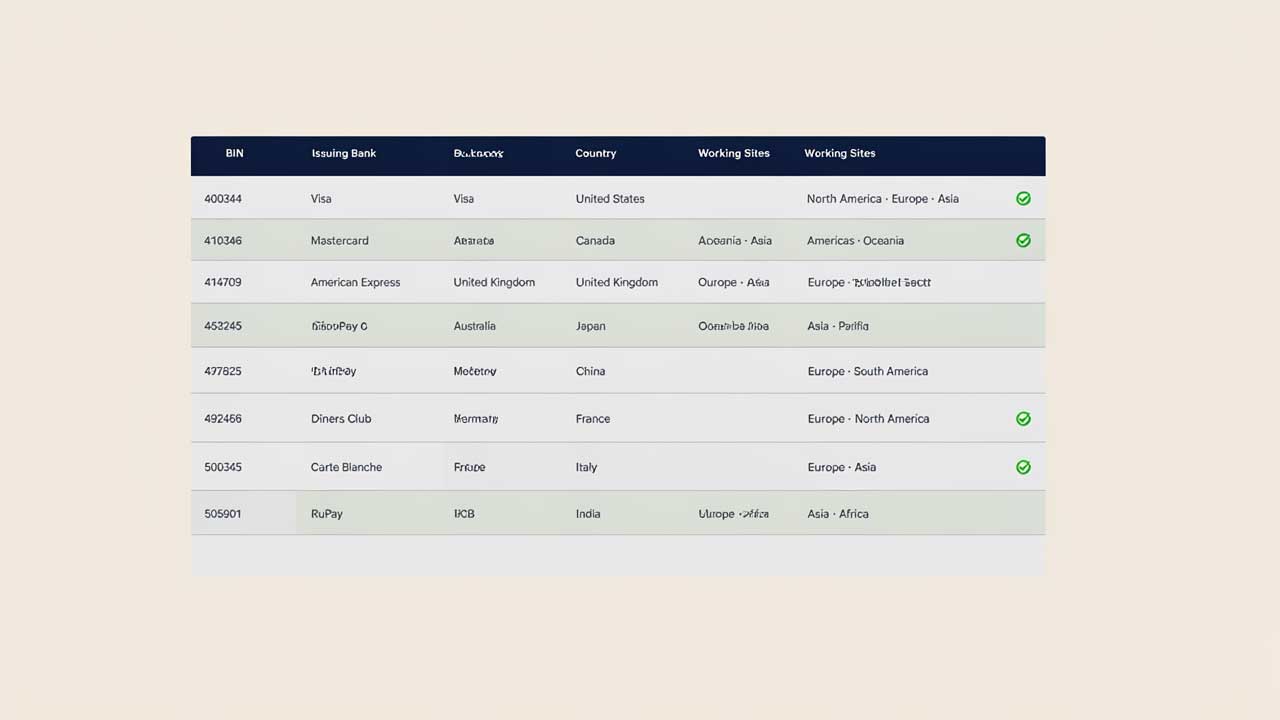
After extensive testing across multiple cardable sites, here are the top 10 Non-VBV BINs for general carding in 2026:
- 400344 – Bank of America Debit USA – Works on Amazon, Walmart, Best Buy
- 410346 – Chase Debit USA – Works on eBay, Target, Home Depot
- 414709 – Wells Fargo Debit USA – Works on Nike, Adidas, ASOS
- 453245 – Barclays Debit UK – Works on ASOS, Boohoo, PrettyLittleThing
- 462345 – TD Canada Trust Debit Canada – Works on Amazon.ca, Walmart.ca
- 477890 – Commonwealth Bank Debit Australia – Works on Amazon.com.au, JB Hi-Fi
- 490123 – Deutsche Bank Germany – Works on Zalando, Otto
- 492456 – Commerzbank Germany – Works on MediaMarkt, Saturn
- 500345 – ING Group Netherlands – Works on Bol.com, Coolblue
- 505901 – Santander Spain – Works on El Corte Ingles, Zara
These BINs have been tested and verified as Non-VBV across multiple payment gateways. They are suitable for beginners and experienced carders alike.
Secure Non-VBV BINs for High-Value Purchases: Electronics, Luxury Goods, and Big-Ticket Items
High-value purchases require BINs with higher limits and lower fraud detection. The following BINs are verified for electronics, luxury goods, and big-ticket items:
Electronics:
- 400344 – Bank of America Debit – Works on Best Buy, Newegg, B&H Photo
- 410346 – Chase Debit – Works on Amazon, Walmart, Target
- 414709 – Wells Fargo Debit – Works on Dell, HP, Lenovo
Luxury Goods:
- 453245 – Barclays Debit UK – Works on Gucci, Prada, Louis Vuitton
- 462345 – TD Canada Trust Debit Canada – Works on Ssense, Holt Renfrew
- 490123 – Deutsche Bank Germany – Works on MyTheresa, Net-a-Porter
Big-Ticket Items:
- 477890 – Commonwealth Bank Debit Australia – Works on Harvey Norman, JB Hi-Fi
- 500345 – ING Group Netherlands – Works on Coolblue, MediaMarkt
- 505901 – Santander Spain – Works on El Corte Ingles, FNAC
For high-value purchases, always test with a small amount first. Use aged accounts and proper setup to avoid triggering fraud alerts.
Best Secure Non-VBV BINs for Gift Card Purchases and Immediate Liquidation
Gift card carding is one of the most profitable carding methods. These BINs are verified for gift card purchases:
Amazon Gift Cards:
- 400344 – Bank of America Debit
- 410346 – Chase Debit
- 414709 – Wells Fargo Debit
eBay Gift Cards:
- 453245 – Barclays Debit UK
- 462345 – TD Canada Trust Debit Canada
- 477890 – Commonwealth Bank Debit Australia
Walmart Gift Cards:
- 490123 – Deutsche Bank Germany
- 492456 – Commerzbank Germany
- 500345 – ING Group Netherlands
Target Gift Cards:
- 505901 – Santander Spain
- 400344 – Bank of America Debit
- 410346 – Chase Debit
For immediate liquidation, use the balance transfer method. Card the gift card to one account, then transfer the balance to a second account before making purchases.
Secure Non-VBV BINs for Digital Goods and Services: Hosting, Domains, and Software
Digital goods and services are excellent targets because there is no shipping address required. These BINs work for hosting, domains, and software purchases:
Web Hosting:
- 400344 – Bank of America Debit – Works on GoDaddy, Namecheap, HostGator
- 410346 – Chase Debit – Works on Bluehost, SiteGround, DreamHost
- 414709 – Wells Fargo Debit – Works on DigitalOcean, Linode, Vultr
Domains:
- 453245 – Barclays Debit UK – Works on 123Reg, Fasthosts, UK2
- 462345 – TD Canada Trust Debit Canada – Works on GoDaddy.ca, Namecheap
- 477890 – Commonwealth Bank Debit Australia – Works on CrazyDomains, Netregistry
Software:
- 490123 – Deutsche Bank Germany – Works on Microsoft, Adobe, JetBrains
- 492456 – Commerzbank Germany – Works on SAP, Salesforce, Oracle
- 500345 – ING Group Netherlands – Works on Spotify, Netflix, Adobe
Digital goods are ideal for beginners because they eliminate the need for drops and shipping addresses.
Also read: Ultimate Guide to CC Cashout In 2026
Country-Specific Secure Non-VBV BINs: Which Regions Have the Weakest Payment Security in 2026?
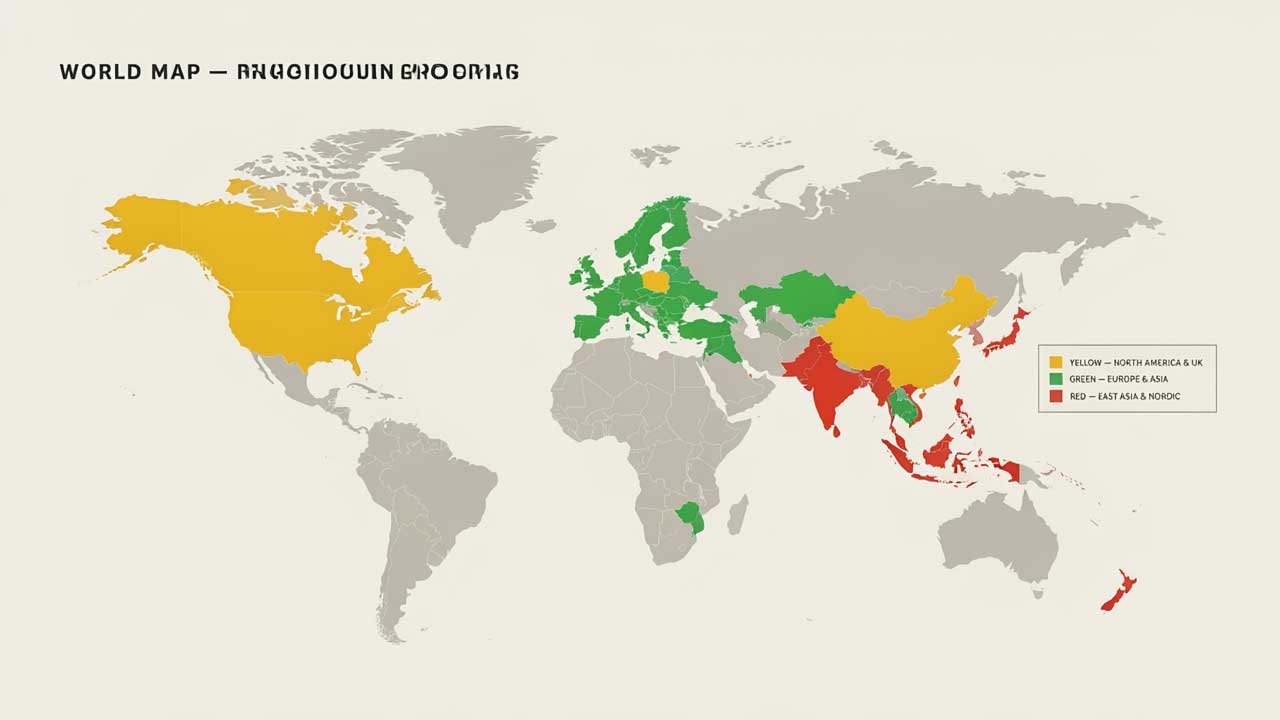
Payment security varies significantly by region. In 2026, the following regions have the weakest payment security and the highest concentration of Non-VBV BINs:
United States: Many debit cards from regional banks and credit unions remain Non-VBV. The US has a fragmented banking system with varying security standards.
United Kingdom: Debit cards from major banks like Barclays, Lloyds, and NatWest often have weak VBV enforcement. Credit cards are more likely to be VBV.
Canada: Canadian debit cards from TD, RBC, Scotiabank, BMO, and CIBC have high Non-VBV rates. Canadian credit cards are increasingly VBV.
Australia: Australian debit cards from Commonwealth Bank, Westpac, ANZ, and NAB are often Non-VBV. Australian credit cards have mixed status.
Germany: German debit cards from Deutsche Bank, Commerzbank, and Sparkasse have high Non-VBV rates. German credit cards are more secure.
Netherlands: Dutch debit cards from ING, ABN AMRO, and Rabobank are often Non-VBV. The Netherlands has a strong payment security culture but some gaps remain.
Spain: Spanish debit cards from Santander, BBVA, and CaixaBank have mixed Non-VBV status. Spanish credit cards are increasingly secure.
Italy: Italian debit cards from UniCredit, Intesa Sanpaolo, and Monte dei Paschi have higher Non-VBV rates than credit cards.
Eastern Europe: Countries like Poland, Czech Republic, Romania, and Bulgaria have weaker payment security and more Non-VBV BINs.
Asia: Countries like India, Indonesia, Philippines, and Vietnam have very weak payment security. Many BINs from these countries are Non-VBV.
BINs That Work on Amazon, eBay, and Major Online Retailers in 2026
Amazon, eBay, and major retailers have varying security levels. Here are BINs verified to work on each platform:
Amazon:
- 400344 – Bank of America Debit USA
- 410346 – Chase Debit USA
- 414709 – Wells Fargo Debit USA
- 453245 – Barclays Debit UK (Amazon.co.uk)
- 462345 – TD Canada Trust Debit Canada (Amazon.ca)
- 477890 – Commonwealth Bank Debit Australia (Amazon.com.au)
eBay:
- 400344 – Bank of America Debit USA
- 410346 – Chase Debit USA
- 453245 – Barclays Debit UK (eBay.co.uk)
- 462345 – TD Canada Trust Debit Canada (eBay.ca)
- 477890 – Commonwealth Bank Debit Australia (eBay.com.au)
Walmart:
- 400344 – Bank of America Debit USA
- 410346 – Chase Debit USA
- 414709 – Wells Fargo Debit USA
Best Buy:
- 400344 – Bank of America Debit USA
- 410346 – Chase Debit USA
- 414709 – Wells Fargo Debit USA
Target:
- 400344 – Bank of America Debit USA
- 410346 – Chase Debit USA
- 414709 – Wells Fargo Debit USA
How to Test a BIN for Non-VBV Status Without Wasting Card Data
Testing BINs without burning card data requires a systematic approach. Follow these steps:
-
Use a small test amount: Start with $1 to $5. If the transaction goes through without OTP, the BIN is likely Non-VBV.
-
Test on multiple sites: A BIN that works on one site may fail on another. Test on at least three different cardable sites.
-
Use a low-risk merchant: Start with merchants that have weak fraud detection. Food delivery and small ecommerce sites are good options.
-
Match the IP to the card country: Use a VPN or proxy that matches the cardholder’s country. This reduces the chance of triggering fraud alerts.
-
Use a clean browser fingerprint: Anti detect browsers prevent fingerprinting that could flag your test transaction.
-
Test at different times: Some BINs work during certain hours but fail during others. Test at different times of day.
-
Keep records: Track which BINs work on which sites. Build a database of successful combinations.
-
Use BIN checker tools: Services like Vladfox.com offer integrated checkers that can test BINs without risking card data.
Common BIN Testing Mistakes That Lead to Card Declines and Burned Data (Secure Non-VBV BINs)
Avoid these common mistakes when testing BINs:
-
Testing with high amounts first: Always start small. Testing with $100+ on an untested BIN is a waste.
-
Ignoring IP matching: Using a US BIN with a UK IP is a guaranteed decline.
-
Using the same account repeatedly: Amazon and other retailers flag accounts that test multiple cards. Use fresh accounts for each test.
-
Testing on high-security sites: Start with low-risk sites. Testing on Apple or Nike first is a mistake.
-
Skipping the browser fingerprint check: Many sites use fingerprinting to detect carding attempts. Use anti detect browsers.
-
Testing during peak hours: Fraud detection systems are more aggressive during high-traffic periods. Test during off-peak hours.
-
Not recording results: Without records, you will repeat failed tests and waste data.
-
Using expired BIN lists: BIN status changes frequently. Using a list from 2023 is useless.
Why BINs Stop Being Non-VBV and How to Find Working Alternatives Quickly (Secure Non-VBV BINs)
BINs stop being Non-VBV for several reasons:
Bank policy updates: Banks periodically update their security policies. A BIN that was Non-VBV last month may have VBV enforced this month.
Regional security changes: Governments and regulators sometimes mandate stronger authentication. This can affect all BINs from a region.
Merchant category changes: Some merchant categories become more heavily scrutinized over time. Gift card and electronics merchants are common targets.
Cardholder behavior patterns: If a bank detects unusual activity on a BIN range, they may enforce VBV for all cards in that range.
Industry-wide changes: Payment networks like Visa and Mastercard periodically update their security requirements. This can affect all BINs.
To find working alternatives quickly:
- Monitor carding forums: Forums are the best source for real-time BIN updates.
- Join Telegram channels: Channels like @worlddumps059 provide daily BIN updates.
- Use BIN checker services: Paid services like Vladfox.com have up-to-date databases.
- Test new BINs regularly: Set aside time each week to test new BINs.
- Build relationships with vendors: Trusted vendors like Clonecards.store and Worlddumps.com provide verified BINs.
Where to Find Updated Non-VBV BIN Lists and How to Evaluate Their Quality (Secure Non-VBV BINs)
Finding updated Non-VBV BIN lists requires knowing where to look and how to evaluate quality:
Sources for updated BIN lists:
- Carding forums: Dark web forums and private Telegram groups are the best sources.
- BIN databases: Paid services maintain databases of BINs and their status.
- Vendor lists: Trusted vendors provide verified BIN lists with their products.
- Community contributions: Some carders share their tested BINs in exchange for access to others’ lists.
How to evaluate BIN list quality:
- Check the date: Lists older than 30 days are likely outdated.
- Look for verification marks: Trusted sources mark which BINs have been tested recently.
- Read user reviews: See what other carders say about the list.
- Test a sample: Before buying a list, test a few BINs to verify quality.
- Check the source reputation: Lists from known vendors are more reliable than anonymous sources.
BIN Databases and Checker Tools: Which Services Are Worth Paying For in 2026?
Several BIN database and checker services are available in 2026. Here is an evaluation of the most popular ones:
Vladfox.com: Integrated checker with prepaid cards and guides. This service allows you to test BINs directly without risking card data. It also provides verified Non-VBV BIN lists. Worth paying for serious carders.
BINBase.io: Comprehensive database of BINs with VBV status. Updated regularly. Good for research but does not provide cards.
BINChecker.net: Basic BIN checker that shows issuing bank and card type. Free but limited. Does not verify VBV status reliably.
CardingForum BIN Databases: Community-maintained databases. Free but require forum membership. Quality varies.
Telegram BIN Channels: Many Telegram channels provide daily BIN updates. Some are free, others require payment. Quality varies widely.
For most carders, Vladfox.com offers the best value because it combines BIN checking with prepaid cards and guides. This eliminates the need for multiple services.
How to Build Your Own BIN Database: Tracking Success Rates Over Time (Secure Non-VBV BINs)
Building your own BIN database is essential for long-term success. Here is how to do it:
-
Create a spreadsheet: Track BIN, issuing bank, card type, country, test date, test site, success/failure, and notes.
-
Test systematically: Test each BIN on multiple sites and record the results.
-
Update regularly: Re-test BINs every 30 days to confirm they are still Non-VBV.
-
Categorize by use case: Create separate tabs for general carding, high-value purchases, gift cards, and digital goods.
-
Share with trusted partners: Exchange database entries with trusted carders to expand your coverage.
-
Use color coding: Green for verified working, yellow for partial success, red for failed.
-
Add notes: Record which proxies, VPNs, and setups were used for each successful test.
A personal BIN database built over time is more valuable than any purchased list because it is tailored to your specific setup and targets.
Secure Non-VBV BINs for Beginners: Low-Risk Options to Start With
Beginners should start with low-risk BINs that have high success rates and low fraud detection. The following BINs are ideal for beginners:
Top beginner BINs:
- 400344 – Bank of America Debit USA – Works on most sites, low fraud detection
- 410346 – Chase Debit USA – High success rate on Amazon and Walmart
- 414709 – Wells Fargo Debit USA – Works on food delivery and small ecommerce
- 453245 – Barclays Debit UK – Good for UK sites, low risk
- 462345 – TD Canada Trust Debit Canada – Works on Canadian sites
Beginner tips:
- Start with $10 to $25 transactions.
- Use food delivery sites for initial tests.
- Match IP to card country exactly.
- Use fresh accounts for each test.
- Record all results in a database.
Advanced BIN Strategies: Combining BINs with Proxies, AVS Bypass, and Geo-Matching
Advanced carders combine BINs with other techniques to maximize success rates:
Proxy matching: Use proxies that match the cardholder’s city and state, not just country. This reduces AVS mismatches.
AVS bypass: Some merchants do not enforce AVS checks. Focus on these merchants for higher success rates.
Geo-matching: Match your browser’s timezone, language, and location settings to the cardholder’s region. This reduces fingerprinting flags.
BIN rotation: Use multiple BINs in rotation to avoid pattern detection. Do not use the same BIN for more than 2-3 transactions.
Amount variation: Vary transaction amounts to avoid triggering amount-based fraud alerts.
Timing variation: Card at different times of day and days of the week to avoid time-based pattern detection.
Account aging: Use aged accounts with purchase history for higher success rates.
How Much Do Working Secure Non-VBV BINs Cost and Where to Buy Them Safely
Working Non-VBV BINs have varying prices depending on quality and source:
Price ranges in 2026:
- Basic BIN lists: $10 to $50 for 100+ BINs. Quality varies.
- Verified BIN lists: $50 to $200 for 50+ verified BINs. Higher quality.
- Premium BIN lists: $200 to $500 for 20+ premium BINs with high limits.
- BIN bundles with cards: $100 to $1000 for BINs bundled with matching cards.
Where to buy safely:
- Vladfox.com: Integrated checker with prepaid cards and guides. Trusted source.
- Clonecards.store: Cards, RDPs, SOCKS5 bundles. Verified BINs included.
- Worlddumps.com: Pre-configured anti-detect profiles with CCs. BINs included.
Safety tips:
- Never buy from anonymous sellers on forums.
- Use escrow services for large purchases.
- Test a small sample before buying a full list.
- Check vendor reputation on multiple forums.
- Use cryptocurrency for anonymous payments.
Common Scams in BIN Markets: How to Avoid Getting Ripped Off When Buying BIN Lists
BIN markets are full of scams. Here are the most common ones and how to avoid them:
Common scams:
- Recycled lists: Sellers sell the same BIN list to multiple buyers. The BINs are often expired or non-working.
- Fake verification: Sellers claim BINs are verified but provide no proof.
- Bait and switch: Seller shows working BINs in preview but delivers non-working ones.
- Phantom BINs: BINs that look real but do not exist in any bank database.
- Time-warp lists: Lists from 2022 or 2023 sold as 2026 updates.
How to avoid scams:
- Buy from trusted vendors only: Clonecards.store, Worlddumps.com, Vladfox.com.
- Request a sample test before buying.
- Check vendor history on multiple forums.
- Use escrow services for large purchases.
- Avoid sellers who only accept irreversible payments.
- Read reviews from multiple sources.
The Future of Secure Non-VBV BINs: What 2026 Changes Mean for Availability and How to Stay Ahead
The future of Non-VBV BINs is uncertain but trends are clear:
Trends affecting availability:
- 3D Secure 2.0 adoption: More banks are adopting 3DS 2.0, which reduces Non-VBV BINs.
- Regulatory pressure: Governments are mandating stronger authentication for online payments.
- AI fraud detection: Machine learning systems are better at detecting carding patterns.
- Payment network rules: Visa and Mastercard are tightening security requirements.
How to stay ahead:
- Diversify BIN sources: Do not rely on a single BIN list or vendor.
- Build relationships: Develop relationships with trusted vendors for early access to new BINs.
- Test constantly: Set aside time each week to test new BINs.
- Monitor forums: Join multiple carding forums for real-time updates.
- Use advanced tools: Services like Vladfox.com provide integrated checking and BIN discovery.
- Focus on emerging regions: Countries with weaker payment security will have more Non-VBV BINs.
The carders who adapt fastest to changing BIN availability will be the most successful in 2026 and beyond.
Also read: Notorious Ways Hackers Steal Your Identity on Social Media
Frequently Asked Questions on Secure Non-VBV BINs
What is a Non-VBV BIN?
A Non-VBV BIN is a Bank Identification Number that is not enrolled in Verified by Visa or has weak 3D Secure enforcement. Transactions using these BINs do not require OTP or additional authentication.
How do I know if a BIN is Non-VBV?
Test the BIN with a small transaction on a cardable site. If the transaction goes through without requesting OTP, the BIN is likely Non-VBV. Use BIN checker services for faster verification.
What are the best Secure Non-VBV BINs for 2026?
The best Non-VBV BINs for 2026 include 400344 (Bank of America Debit), 410346 (Chase Debit), 414709 (Wells Fargo Debit), 453245 (Barclays Debit UK), and 462345 (TD Canada Trust Debit Canada).
How long do Secure Non-VBV BINs stay working?
Non-VBV status can change at any time. Some BINs stay Non-VBV for months, others for days. Test BINs regularly and maintain an updated database.
Where can I buy Secure Non-VBV BINs safely?
Buy Non-VBV BINs from trusted vendors like Vladfox.com, Clonecards.store, and Worlddumps.com. Avoid anonymous sellers on forums.
What is the difference between VBV and Non-VBV?
VBV (Verified by Visa) requires additional authentication during checkout, typically an OTP. Non-VBV does not require this authentication, making transactions easier to complete with stolen card data.
Can I use Non-VBV BINs on any site?
No. Some sites enforce VBV checks regardless of BIN status. Match Non-VBV BINs with cardable sites that do not enforce these checks.
How do I test a BIN without wasting card data?
Use a small test amount ($1 to $5) on a low-risk site. If the transaction goes through, the BIN is likely Non-VBV. Use BIN checker tools for faster testing.
What should I do if a BIN stops working?
Replace it with a new BIN from your database. Test new BINs regularly to maintain a supply of working options.
Are Sedcure Non-VBV BINs legal?
Non-VBV BINs themselves are legal. Using them with stolen card data is illegal. This guide is for educational purposes only.
