


Introduction (Dark Web Browsers)
The dark web remains one of the most misunderstood parts of the internet. For journalists, privacy advocates, researchers, and everyday users concerned about surveillance, accessing the dark web securely starts with choosing the right browser. Not all browsers are created equal when it comes to anonymity, encryption, and Tor integration.
This guide covers the top 10 dark web browsers for secure Tor browsing in 2026. We have tested each option for security, speed, usability, and compatibility with the Tor network. Whether you are a complete beginner or an experienced security researcher, this guide will help you make the right choice.
We’ve done the search. Now discover the Real Resources
Finding the right tools shouldn't have to mean endless searching, or taking chances on unknown vendors. That’s why we invested valuable time during our research period to identify useful payment security resources.
Verified and Recommeded Tools / Service Shops
escrow deals for businesses worldwide.
Also read: Ultimate Guide to CC Cashout In 2026
What Is the Dark Web?
The dark web is a hidden part of the internet that is not indexed by standard search engines like Google or Bing. It exists on overlay networks such as Tor, I2P, and Freenet, which require specialized software to access. Unlike the surface web that most people use daily, the dark web is designed to provide anonymity to both users and website operators.
The dark web is often confused with the deep web. The deep web includes all parts of the internet not indexed by search engines, such as private databases, email accounts, and subscription services. The dark web is a small subset of the deep web that is intentionally hidden and requires specific tools to access.

Does the dark web really exist? Yes, it absolutely does. It is a real network of websites, forums, markets, and communication channels that operate outside the reach of traditional browsers and search engines. The dark web meaning in computing refers to these encrypted, anonymized networks that prioritize privacy over convenience.
What exactly is inside the dark web? You will find everything from privacy-focused email services and secure messaging platforms to forums on cryptography, whistleblowing platforms, and marketplaces. The dark web is also home to legitimate uses like anonymous journalism, political dissent in repressive regimes, and secure communication for activists.
A simple dark web definition is this: a collection of websites and services that are intentionally hidden and require specific software, configurations, or authorization to access. The dark web is used for both legitimate privacy purposes and illegal activities, much like the surface web.
How to Access the Dark Web Safely
Accessing the dark web safely requires more than just downloading a browser. You need a comprehensive approach to security and anonymity. Here are the essential steps:

-
Choose the right browser: Not all browsers are suitable. You need one that routes traffic through the Tor network or similar anonymization system.
-
Use a VPN: A VPN adds an extra layer of encryption and hides your Tor usage from your ISP. Connect to your VPN before opening your dark web browser.
-
Disable JavaScript: JavaScript can be used to de-anonymize users. Most secure dark web browsers disable it by default.
-
Avoid downloading files: Files downloaded from the dark web can contain trackers or malware that leak your real IP address.
-
Do not log into personal accounts: Never access your email, social media, or banking while using a dark web browser.
-
Use a dedicated operating system: For maximum security, use Tails OS or Whonix which are designed specifically for anonymity.
-
Verify .onion links: Always verify the authenticity of .onion links from multiple sources to avoid phishing sites.
-
Keep your software updated: Outdated browsers and operating systems have known vulnerabilities that can compromise your anonymity.
Best Dark Web Browsers For Anonymity 2026
The best dark web browsers for anonymity in 2026 combine Tor routing, anti fingerprinting measures, no logging policies, and regular security updates. After extensive testing, the top contenders are:
- Tor Browser – The gold standard for dark web access
- Brave Browser – Built-in Tor mode for convenience
- Whonix – Maximum security through virtualization
- Tails OS – Complete anonymity operating system
- I2P Browser – Alternative dark web network
- Subgraph OS – Security-focused Linux distribution
- Mullvad Browser – Privacy browser with Tor support
- Firefox with Tor Configuration – For advanced users
- Waterfox – Firefox fork with privacy enhancements
- Onion Browser – For iOS users
Each of these browsers offers different tradeoffs between security, speed, and usability. The right choice depends on your threat model and technical expertise.
How Do Deep Web Browsers and Dark Web Browsers Work for Keeping Privacy?
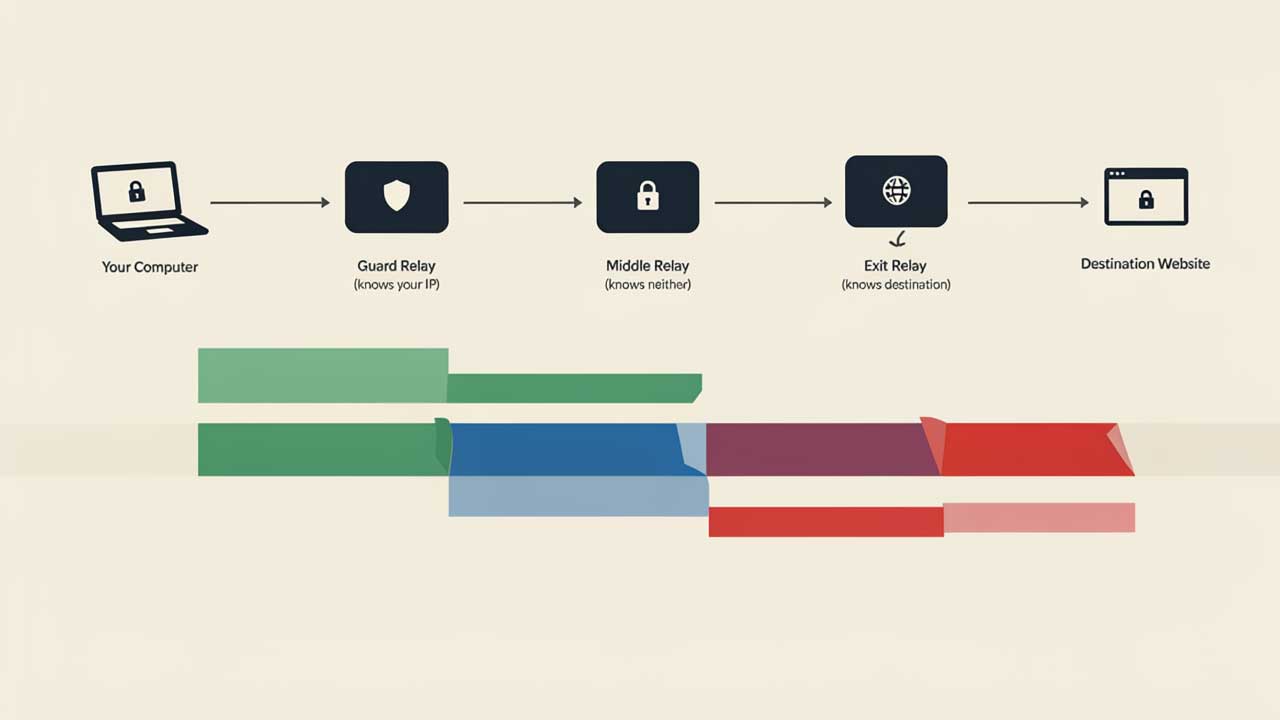
Deep web browsers and dark web browsers work by routing your internet traffic through multiple layers of encryption and relay nodes. This process, known as onion routing for Tor-based browsers, ensures that no single node knows both your identity and the destination you are visiting.

Here is how it works:
-
Your traffic is encrypted: When you send a request, it is encrypted multiple times, like layers of an onion.
-
Traffic passes through relays: Your encrypted data passes through a series of randomly selected relays. Each relay removes one layer of encryption, revealing only the next relay’s address.
-
The exit node decrypts the final layer: The last relay, called the exit node, decrypts the final layer and sends your request to the destination website.
-
The destination sees the exit node’s IP: The website you visit sees the IP address of the exit node, not your real IP address.
-
Return traffic follows the same path: The response travels back through the same relay chain, with each relay adding a layer of encryption.
This process ensures that no single relay can know both your identity and what you are accessing. Your ISP can see that you are using Tor but cannot see your destination. The exit node can see your destination but cannot see your identity.
What Is a Dark Web Browser and How Is It Different from a Standard Browser?
A dark web browser is a specialized software application designed to access the dark web, which is a part of the internet that is not indexed by standard search engines and requires specific protocols to reach. The key differences between a dark web browser and a standard browser are:
Routing: Standard browsers like Chrome or Safari connect directly to websites using your real IP address. Dark web browsers route your traffic through anonymization networks like Tor, hiding your IP address.
Encryption: Standard browsers use HTTPS encryption which protects data in transit but does not hide your identity. Dark web browsers use multiple layers of encryption and relay the traffic through multiple nodes.

Access: Standard browsers cannot access .onion websites or other dark web protocols. Dark web browsers are specifically designed to access these hidden services.
Fingerprinting protection: Standard browsers leak information about your device, browser, and configuration through fingerprinting. Dark web browsers include anti fingerprinting measures to make all users look identical.
Default settings: Standard browsers prioritize speed and convenience over privacy. Dark web browsers prioritize security and anonymity, often disabling JavaScript, blocking trackers, and clearing data after each session.
Logging: Standard browsers may log your browsing history, cookies, and other data. Dark web browsers typically have no logging policies and clear all data when closed.
Why Tor Is the Foundation of Dark Web Browsing and What Its Limitations Are
Tor (The Onion Router) is the foundation of most dark web browsing because it provides a proven, decentralized network for anonymous communication. Developed originally by the US Naval Research Laboratory and now maintained by the Tor Project, Tor has been continuously improved since its public release in 2002.
Why Tor is the foundation:
- Proven technology: Tor has been tested and audited by security researchers worldwide for over two decades.
- Large network: Thousands of volunteer-run relays provide a diverse and robust network.
- Wide support: Most dark web tools and services are built around Tor.
- Active development: The Tor Project continuously improves security and usability.
- Community trust: Tor is the most trusted anonymity network available.
Tor’s limitations:
- Speed: Tor is slower than standard browsing because traffic passes through multiple relays.
- Exit node vulnerability: The exit node can see your traffic if it is not encrypted with HTTPS.
- Website blocking: Some websites block Tor exit nodes, preventing access.
- Fingerprinting risks: Advanced attackers can potentially de-anonymize Tor users through traffic analysis.
- Not immune to attacks: State-level adversaries with resources can potentially compromise Tor users.
Despite these limitations, Tor remains the best option for most dark web users. The limitations can be mitigated with proper configuration and additional tools.
What Features Should a Dark Web Browser Have for Maximum Security and Anonymity?
When evaluating dark web browsers, look for these essential features:
-
Tor integration: The browser should route traffic through the Tor network natively or through easy configuration.
-
Anti fingerprinting: The browser should prevent websites from identifying you through browser fingerprints, screen resolution, installed fonts, and other unique characteristics.
-
No logging: The browser should not store browsing history, cookies, or cache data after the session ends.
-
JavaScript control: The browser should allow you to disable JavaScript or control which sites can run it.
-
HTTPS enforcement: The browser should force HTTPS connections whenever possible to protect data from exit node snooping.
-
Tracker blocking: Built-in tracker and ad blocking reduces the amount of data websites can collect about you.
-
DNS protection: The browser should prevent DNS leaks that could reveal your real IP address.
-
Automatic updates: Regular security updates are essential for protecting against new vulnerabilities.
-
Sandboxing: The browser should isolate itself from the rest of your system to prevent malware infections.
-
Clear separation: The browser should clearly separate your dark web activities from your regular browsing.
The Top 10 Dark Web Browsers for Secure Tor Browsing in 2026: An Overview
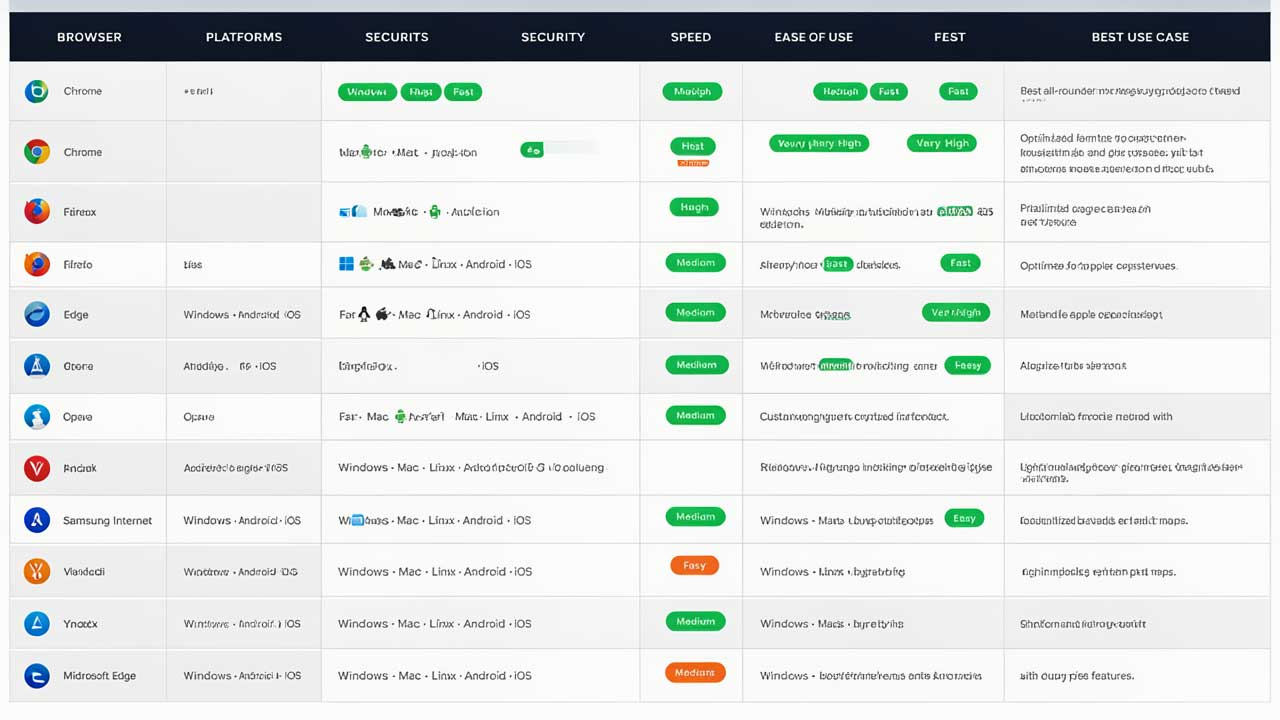
Here is a quick overview of the top 10 dark web browsers for secure Tor browsing in 2026:
| Browser | Platform | Security Level | Speed | Ease of Use | Best For |
|---|---|---|---|---|---|
| Tor Browser | Win/Mac/Linux/Android | High | Medium | Easy | General dark web access |
| Brave Browser | Win/Mac/Linux/Android/iOS | Medium | Fast | Easy | Combined browsing |
| Firefox + Tor Config | Win/Mac/Linux | Medium | Fast | Medium | Advanced customization |
| Whonix | Linux (VM) | Very High | Slow | Hard | Maximum security |
| Tails OS | USB/Live Boot | Very High | Medium | Medium | Portable anonymity |
| I2P Browser | Win/Mac/Linux | High | Slow | Medium | Alternative dark web |
| Subgraph OS | Linux | High | Medium | Medium | Security focused OS |
| Mullvad Browser | Win/Mac/Linux | High | Medium | Easy | Privacy with Tor support |
| Waterfox | Win/Mac/Linux | Medium | Fast | Easy | Firefox fork with privacy |
| Onion Browser | iOS | High | Slow | Easy | iPhone dark web access |
Tor Browser: The Gold Standard for Dark Web Access. Is It Still the Best Choice?
Tor Browser remains the gold standard for dark web access in 2026. Developed by the Tor Project, it is a modified version of Firefox ESR (Extended Support Release) that has been hardened for privacy and anonymity.
Key features:
- Built-in Tor routing
- Anti fingerprinting measures
- No browsing history stored by default
- Automatic HTTPS enforcement
- NoScript pre installed
- Regular security updates
Why it is still the best choice: Tor Browser is the most tested and trusted dark web browser available. It receives frequent updates from the Tor Project, has a large community of users and developers, and is compatible with the vast majority of .onion sites.
Limitations: Tor Browser is slower than alternatives like Brave with Tor mode. Some websites block Tor exit nodes. The default security settings may break some websites.
Verdict: Tor Browser is still the best choice for most users in 2026. It offers the best balance of security, usability, and compatibility.
Brave Browser: Does Its Built-in Tor Mode Make It a Viable Alternative?
Brave Browser has gained popularity as a dark web browser because of its built-in Tor mode. When you open a private window with Tor in Brave, your traffic is routed through the Tor network without needing to download the full Tor Browser.
Key features:
- Built-in ad and tracker blocking
- Tor mode in private windows
- Faster than Tor Browser for clearnet sites
- Chromium based with wide extension support
- Built-in crypto wallet
Pros:
- Convenient all-in-one browser
- Good for both clearnet and dark web
- Faster performance
- Regular updates
Cons:
- Tor mode is not as hardened as full Tor Browser
- Fewer privacy customizations
- May leak information through extensions
Is it a viable alternative? For casual dark web browsing, yes. For users who need maximum anonymity, no. Brave’s Tor mode is convenient but not as secure as Tor Browser. Use Brave for light dark web exploration, but switch to Tor Browser or Whonix for sensitive activities.
Firefox with Tor Configuration: For Users Who Want More Control
Firefox can be configured as a dark web browser by manually setting up Tor routing. This gives users more control over their privacy settings but requires technical knowledge.
How to configure Firefox for Tor:
- Download Firefox from the official website.
- Install and launch Firefox.
- Go to Settings > Network Settings.
- Select Manual proxy configuration.
- Set SOCKS Host to 127.0.0.1 and Port to 9050 (or your Tor proxy port).
- Select SOCKS v5 and check “Proxy DNS when using SOCKS v5”.
- Apply the settings.
- Install privacy extensions like uBlock Origin and HTTPS Everywhere.
- Disable WebRTC to prevent IP leaks.
- Set privacy.preferences to maximum.
Pros:
- Highly customizable
- Familiar interface
- Wide range of extensions
- Can be hardened for maximum security
Cons:
- Requires manual configuration
- Not as secure out of the box as Tor Browser
- Risk of misconfiguration
Best for: Advanced users who want fine-grained control over their privacy settings and are willing to invest time in configuration.
Whonix: The Most Secure Operating System for Dark Web Activities. Is It Overkill?
Whonix is not just a browser but a complete operating system designed for anonymity. It runs as a virtual machine and routes all traffic through Tor. Whonix consists of two VMs: Whonix Gateway (routes traffic through Tor) and Whonix Workstation (where you run applications).
Key features:
- All traffic forced through Tor
- DNS leaks impossible by design
- Works with any application, not just browsers
- Advanced anti fingerprinting
- Isolated network stack
Pros:
- Extremely secure
- Prevents IP leaks by design
- Good for high risk activities
- Works with any software
Cons:
- Requires virtualization software
- More complex setup
- Resource intensive
- Slower performance
Is it overkill? For most users, yes. Whonix is designed for users with high threat models such as journalists, whistleblowers, and activists in repressive regimes. For casual dark web browsing, Tor Browser is sufficient. However, if you are conducting sensitive research or need maximum anonymity, Whonix is worth the extra effort.
Tails OS: The Amnesiac Incognito Operating System for Paranoid Users
Tails (The Amnesic Incognito Live System) is a complete operating system that runs from a USB drive and leaves no trace on the computer. It routes all traffic through Tor and includes pre-configured applications for secure communication.
Key features:
- Amnesic: leaves no trace when removed
- All traffic through Tor
- Includes Tor Browser, Thunderbird, and other secure apps
- Cryptographic tools included
- Persistent storage option for files
Pros:
- Complete privacy solution
- No installation needed
- Works on any computer
- Leaves no digital footprint
Cons:
- Requires USB drive
- Slower performance
- Limited storage
- Requires reboot to switch between normal and secure browsing
Best for: Users who need a portable, no trace dark web browsing solution. Tails is ideal for traveling, using public computers, or situations where you cannot trust the host operating system.
I2P Browser: An Alternative to Tor for Dark Web Access
I2P (Invisible Internet Project) is an alternative dark web network that focuses on peer to peer communication. Unlike Tor which is designed for accessing the public internet anonymously, I2P is designed for hosting and accessing hidden services within its own network.
Key features:
- Garlic routing: multiple messages bundled together
- Stronger anonymity for peer to peer activities
- Built-in torrent client
- Decentralized network
- Eepsites: I2P’s version of .onion sites
Pros:
- Better for file sharing and hidden services
- Strong anonymity
- Decentralized design
- Active community
Cons:
- Smaller network
- Fewer websites
- Not designed for clearnet access
- Slower than Tor
Best for: Users who want to host hidden services, share files anonymously, or access I2P specific content. I2P is not a replacement for Tor for general dark web browsing but a complement.
Subgraph OS: A Security-Focused Linux Distribution for Dark Web Browsing
Subgraph OS is a Linux based operating system designed for security and anonymity. It includes a hardened version of Tor Browser and uses a unique application sandboxing system to isolate applications from each other and from the core system.
Key features:
- Hardened kernel with security patches
- Application sandboxing
- Tor Browser included
- Encrypted by default
- Metaproxy for secure network routing
Pros:
- Strong security focus
- Sandboxing prevents malware spread
- Good for secure communications
- Regular updates
Cons:
- Less popular
- Smaller community
- Limited software availability
- Requires Linux knowledge
Best for: Security conscious users who want a dedicated operating system with strong isolation between applications.
Mullvad Browser: A Privacy-Focused Browser with Tor Support
Mullvad Browser is a privacy-focused browser developed by the Mullvad VPN team in collaboration with the Tor Project. It is designed to minimize fingerprinting and can be used with Tor or a VPN.
Key features:
- Anti fingerprinting measures
- Tor support through configuration
- No telemetry or tracking
- Built-in ad and tracker blocking
- Regular security updates
Pros:
- Strong privacy focus
- Easy to use
- Good documentation
- Developed by trusted team
Cons:
- Requires separate Tor setup
- Not as widely tested as Tor Browser
- Fewer features than Tor Browser
Best for: Users who want a privacy-focused browser that can be configured for Tor but also works well for regular browsing.
Waterfox and Other Firefox Forks: Are They Secure Enough for Tor Browsing?
Waterfox is a Firefox fork that focuses on privacy and performance. It removes telemetry, data collection, and other privacy invasive features found in standard Firefox.
Key features:
- No telemetry or data collection
- Supports legacy Firefox extensions
- Regular updates
- Privacy focused defaults
Pros:
- Familiar Firefox interface
- Good performance
- Wide extension support
Cons:
- Not designed specifically for Tor
- Requires manual Tor configuration
- May not have all anti fingerprinting measures
- Smaller security team
Are they secure enough for Tor browsing? Waterfox and similar Firefox forks can be configured for Tor browsing, but they are not as secure as Tor Browser out of the box. They lack the hardening, anti fingerprinting, and security patches that Tor Browser includes. For casual use, they may be acceptable, but for serious anonymity, stick with Tor Browser.
Comparing the Top 3 Browsers: Tor vs Brave vs Whonix for Different Use Cases
Tor Browser:
- Best for: General dark web browsing
- Security: High
- Speed: Medium
- Ease of use: Easy
- Platform: Win/Mac/Linux/Android
Brave Browser:
- Best for: Combined clearnet and dark web browsing
- Security: Medium
- Speed: Fast
- Ease of use: Easy
- Platform: Win/Mac/Linux/Android/iOS
Whonix:
- Best for: Maximum security and high risk activities
- Security: Very High
- Speed: Slow
- Ease of use: Hard
- Platform: Linux (VM)
Use case recommendations:
- Casual dark web browsing: Tor Browser or Brave
- Sensitive research: Tor Browser with VPN
- High risk activities: Whonix or Tails OS
- Mobile browsing: Tor Browser for Android or Onion Browser for iOS
- Combined browsing: Brave Browser
Which Dark Web Browser Is Best for Beginners in 2026?
For beginners, the best dark web browser is Tor Browser. Here is why:
- Easy installation: Download from torproject.org and install like any other program.
- Pre-configured: Tor Browser comes ready to use with optimal security settings.
- Large community: Extensive documentation, forums, and tutorials available.
- Compatibility: Works with most .onion sites and dark web services.
- Regular updates: Automatic updates keep you protected.
Steps for beginners:
- Download Tor Browser from the official Tor Project website.
- Install and launch the browser.
- Connect to the Tor network.
- Start browsing. Do not change the default settings.
- Use a VPN before opening Tor Browser for extra security.
Brave Browser is also a good option for beginners who want a single browser for both regular and dark web browsing.
Which Dark Web Browser Is Best for Experienced Users and Security Researchers?
For experienced users and security researchers, the best options are Whonix and Tails OS.
Whonix:
- Provides the highest level of anonymity
- Prevents IP leaks by design
- Allows use of any application through Tor
- Suitable for advanced research and testing
Tails OS:
- Leaves no trace on the host computer
- Portable on USB drive
- Complete privacy solution
- Good for field work and sensitive operations
Additional tools for experienced users:
- I2P for alternative dark web access
- Custom configured Firefox with Tor
- VPN + Tor combination for defense in depth
- Dedicated hardware for dark web activities
Experienced users should also maintain their own BIN databases, use anti detect browsers for carding activities, and stay updated on the latest security vulnerabilities.
Also read: Secure Non-VBV BINs List for 2026
Common Mistakes That Compromise Your Anonymity When Using Dark Web Browsers
Avoid these common mistakes to maintain your anonymity:
-
Maximizing the browser window: This reveals your screen resolution and can fingerprint you.
-
Downloading and opening documents: PDFs, images, and other files can contain trackers that leak your real IP.
-
Using personal accounts: Logging into Facebook, Google, or email while using Tor can de-anonymize you.
-
Enabling JavaScript: JavaScript can be used to reveal your real IP and browser fingerprint.
-
Using the same browser for clearnet and dark web: This creates a link between your identities.
-
Ignoring browser updates: Outdated browsers have known vulnerabilities.
-
Using Tor without a VPN: Your ISP can see you are using Tor, which may be suspicious in some countries.
-
Installing unnecessary extensions: Extensions can leak information or introduce vulnerabilities.
-
Sharing personal information: Never use your real name, email, or other identifying information.
-
Trusting .onion links without verification: Phishing sites are common on the dark web.
How to Install and Configure Your Chosen Dark Web Browser for Maximum Privacy
Tor Browser installation:
- Visit torproject.org and download the version for your operating system.
- Verify the download signature to ensure authenticity.
- Install the browser normally.
- Launch and connect to the Tor network.
- Go to about:preferences#privacy and review security settings.
- Set security level to Safer or Safest for maximum protection.
- Disable JavaScript unless absolutely necessary.
Brave Browser Tor mode:
- Download Brave from brave.com.
- Install and launch.
- Open a new private window with Tor.
- Verify Tor connection at check.torproject.org.
- Disable unnecessary extensions.
Whonix installation:
- Download VirtualBox or another VM host.
- Download Whonix Gateway and Workstation images.
- Import both VMs into VirtualBox.
- Start Whonix Gateway first, then Whonix Workstation.
- All traffic is automatically routed through Tor.
Tails OS installation:
- Download the Tails ISO from tails.net.
- Use Etcher or similar tool to write the ISO to a USB drive.
- Boot from the USB drive.
- Configure persistent storage if needed.
- All traffic is automatically routed through Tor.
Where to Download the Safest Dark Web Browsers and How to Verify Their Authenticity
Always download dark web browsers from official sources only. Third party download sites may bundle malware or modified versions that compromise your security.
Official download links:
- Tor Browser: torproject.org
- Brave Browser: brave.com
- Whonix: whonix.org
- Tails OS: tails.net
- I2P: geti2p.net
- Subgraph OS: subgraph.com
- Mullvad Browser: mullvad.net
- Waterfox: waterfox.net
How to verify authenticity:
- Check the download page uses HTTPS.
- Verify the file signature using GPG if available.
- Compare the file hash with the published hash on the official site.
- Check the certificate details on the download page.
- Use official mirrors listed on the project’s website.
Red flags to watch for:
- Sites offering “modified” or “enhanced” versions of Tor Browser
- Download links on forums or social media
- Sites that ask for personal information before download
- Sites with expired or invalid SSL certificates
The Future of Dark Web Browsing: What Security Trends Will Shape 2027 and Beyond
Several trends will shape the future of dark web browsing:
-
Increased adoption of 3D Secure 2.0: More banks and payment gateways will enforce strong authentication, making Non-VBV BINs harder to find.
-
AI powered fraud detection: Machine learning systems will become better at detecting carding patterns and anonymous browsing behavior.
-
Improved Tor performance: The Tor Project continues to work on speed improvements, including congestion control and better relay selection.
-
Browser fingerprinting arms race: As anti fingerprinting measures improve, fingerprinting techniques will also advance.
-
Decentralized alternatives: I2P and other decentralized networks may gain popularity as alternatives to Tor.
-
Regulatory pressure: Governments may increase pressure on anonymity tools, potentially leading to more restrictions.
-
Integration with other privacy tools: Expect tighter integration between browsers, VPNs, and other privacy tools.
-
Mobile dark web browsing: More users will access the dark web from mobile devices, driving improvements in mobile browsers.
To stay ahead, keep your tools updated, diversify your BIN sources, and maintain relationships with trusted vendors.
Also read: VALID LIST OF CARDABLE SITES 2026
Frequently Asked Questions on Dark Web Browsers
What is the best dark web browser for beginners in 2026?
Tor Browser is the best dark web browser for beginners. It is easy to install, pre-configured for anonymity, and has extensive documentation. Download it from torproject.org.
Can I access the dark web on my phone?
Yes. Android users can use Tor Browser for Android. iPhone users can use Onion Browser. Mobile dark web browsing is less secure than desktop due to mobile OS limitations.
Do I need a VPN with Tor Browser?
Using a VPN with Tor is optional but recommended for defense in depth. Connect to your VPN first, then open Tor Browser. This hides your Tor usage from your ISP.
What is the difference between Tor and I2P?
Tor is designed for anonymous access to the public internet and .onion sites. I2P is designed for anonymous peer to peer communication and hosting hidden services within its own network.
Is Brave Browser safe for dark web browsing?
Brave Browser with Tor mode is safe for casual dark web browsing. For maximum security, use Tor Browser or Whonix.
How do I verify that my dark web browser is working correctly?
Visit check.torproject.org to verify your traffic is going through Tor. The site will show your Tor exit node IP address.
Where can I get Non-VBV BINs and carding materials?
Visit Vladfox.com for Non-VBV BINs and integrated checker tools. Clonecards.store offers clone cards, dumps with PIN, and carding materials. Worlddumps.com provides money transfer services including bank transfer, PayPal, CashApp, Venmo, Zelle, and Western Union transfers.
What should I do if my dark web browser is blocked by a website?
Try using a different exit node by selecting “New Tor Circuit for this Site” in Tor Browser. You can also try a different browser or use a VPN before Tor.
How often should I update my dark web browser?
Update your browser as soon as updates are available. Outdated browsers have known vulnerabilities that can compromise your anonymity.
Can I use a dark web browser for regular browsing?
Some browsers like Brave and Mullvad Browser are designed for both regular and dark web browsing. Tor Browser is optimized for dark web use but can be slow for regular browsing.
