


Table of Contents
ToggleIntroduction (Carding Tutorial for Beginners)
Welcome to the complete carding tutorial for beginners 2026 guide. This tutorial is updated for 2026 and covers everything you need to know to start carding from scratch. Whether you are completely new to carding or have some experience and want a refresher, this guide covers it all.
Carding is the process of using stolen credit or debit card data to make unauthorized purchases online. It requires knowledge of payment systems, fraud detection mechanisms, and digital anonymity tools. This tutorial breaks down every component into simple, actionable steps.
We’ve done the search. Now discover the Real Resources
Finding the right tools shouldn't have to mean endless searching, or taking chances on unknown vendors. That’s why we invested valuable time during our research period to identify useful payment security resources.
Verified and Recommeded Tools / Service Shops
escrow deals for businesses worldwide.
Understanding Carding Key Terms (Carding Tutorial for Beginners)
Before you start carding, you must understand the terminology. Here are the most important terms:
BIN: Bank Identification Number. The first six digits of a credit or debit card. Identifies the issuing bank, card type, and VBV status.

CVV: Card Verification Value. The three digit code on the back of Visa and Mastercard cards or four digit code on American Express cards. Required for most online transactions.
Fullz: Complete card data including card number, expiry date, CVV, cardholder name, billing address, phone number, email, date of birth, and Social Security Number.
Dumps: Raw magnetic stripe data from a card. Used for cloning physical cards for ATM withdrawals and in store purchases.
VBV: Verified by Visa. A security protocol that requires cardholder authentication during online transactions.
MSC: Mastercard SecureCode. Mastercard’s equivalent of VBV.
Non-VBV: A card that is not enrolled in Verified by Visa. Does not require OTP for online transactions.
Non-MSC: A card that is not enrolled in Mastercard SecureCode.

OTP: One Time Password. A temporary code sent to the cardholder’s phone during VBV/MSC authentication.
AVS: Address Verification System. Checks the billing address against the cardholder’s records.
SOCKS5: A proxy protocol that routes internet traffic through an intermediary server for anonymity.
Drop: A physical address used to receive carded goods without connecting to your real identity.
Cashout: The process of converting carded goods or services into cash.
Cardable site: A website with weak fraud detection that can be successfully carded.
Chargeback: When a cardholder disputes a fraudulent transaction and the bank reverses the charge.
Essential Tools for Carding Tutorial for Beginners
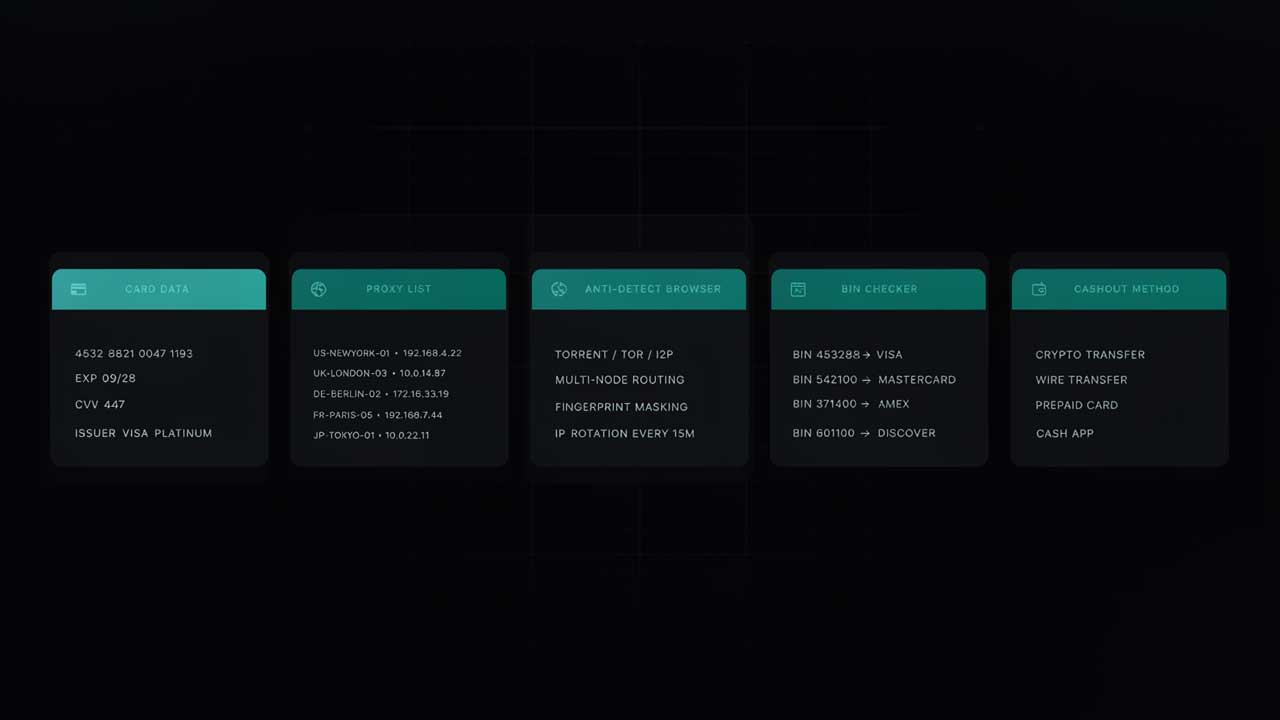
To start carding, you need these essential tools:
Card Data: Fresh Non-VBV CVVs, fullz, or dumps from trusted vendors. Sources: Vladfox.com, Clonecards.store.
Proxies or VPN: Residential SOCKS5 proxies matching the card country. Sources: Clonecards.store offers SOCKS5 bundles.
Anti-Detect Browser: Multilogin, Indigo, or Dolphin Anty. For beginners, Tor Browser with proper configuration works.
BIN Checker: Service to test BIN VBV status before use. Sources: Vladfox.com integrated checker.
Fresh Email Accounts: Temporary email addresses for creating accounts on cardable sites.
Drop or Cashout Method: Physical drop for receiving goods. Digital cashout through Worlddumps.com for bank transfer, PayPal, CashApp, Venmo, Zelle, or Western Union.
Operational Security Tools: Dedicated device for carding activities. Encrypted messaging app. Cryptocurrency wallet for payments.
Carding Tutorial for Beginners Security Check and Setup
Before attempting any carding, complete these security checks:
Check your IP address: Visit whatismyip.com to confirm your IP is not your real IP. Confirm the IP is in the correct country matching your card BIN.
Check for DNS leaks: Visit dnsleaktest.com to confirm there are no DNS leaks. DNS leaks reveal your real ISP even when using a proxy.
Check for WebRTC leaks: Visit ipleak.net to confirm there are no WebRTC leaks. WebRTC leaks reveal your real IP address even behind a proxy.
Check your browser fingerprint: Visit amiunique.org to see how unique your browser fingerprint is. The more unique your fingerprint, the easier you are to track.
Check your timezone and language: Ensure your system timezone matches your proxy location. Ensure your browser language matches your proxy location.
Where to Check for IP Quality
IP quality affects carding success. Use these tools to check:
IP quality checkers: Whatismyip.com for basic IP info. IPqualityscore.com for fraud scoring. Shodan.io for IP reputation.
What to look for: IP is residential not datacenter. IP is in the correct country and city. IP has no blacklist history. IP has a low fraud score. IP is not from a known proxy or VPN provider.
Red flags: IP from a datacenter. IP from a known VPN provider. IP with high fraud score. IP blacklisted on multiple databases. IP from a country you are not targeting.
Risks and Safety Steps (Carding Tutorial for Beginners)
Carding carries significant risks. Here is what you need to know:
Legal risks: Carding is illegal in virtually every country. Penalties include prison sentences and fines.
Financial risks: Dead card data wastes money. Scam vendors take your money without delivering. Chargebacks can result in account closures.
Technical risks: Fraud detection systems flag suspicious transactions. IP and browser fingerprint mismatches trigger declines. BINs become VBV without warning.
Safety steps: Use a dedicated device for carding only. Never use your real name or personal information. Use encrypted communications. Use cryptocurrency for payments. Never discuss carding on personal accounts. Clear all data after each session.
How to Check a Card’s Fraud Score (Carding Tutorial for Beginners)
A card’s fraud score indicates how likely it is to be flagged by fraud detection systems. Here is how to check:
Factors that affect fraud score: Card age. Newer cards have lower fraud scores. Card type. Debit cards have lower scores than credit cards. Issuing bank. Regional banks have lower scores than major banks. Card country. USA and UK cards have lower scores than some other countries. Card balance. Higher balance cards may have higher scores.
How to check: Use Vladfox.com integrated checker. Check the BIN against known fraud databases. Test with a small transaction on a low risk site.
What is a good fraud score: Low score 0 to 30. Safe to use. Medium score 30 to 60. Use with caution. High score 60 to 100. Avoid using.
How to Check a Card’s Status
Checking a card’s status confirms whether it is live or dead. Here are the methods:
Method 1: BIN Checker Use Vladfox.com integrated checker to confirm BIN status and card validity.
Method 2: Small Test Transaction Make a $1 to $5 purchase on a low risk site like Uber Eats or GoDaddy. If approved, the card is live. If declined, the card may be dead or the BIN may be VBV.
Method 3: Pre-auth Check Some sites allow saving a card without purchase. Adding the card triggers a small pre-authorization check. Confirms the card is active.
Signs of a dead card: Immediate decline without processing. Card not recognized by payment gateway. Expired expiry date. BIN known to be blacklisted.
Carding Tutorial for Beginners Risks to Know
Account takeover: If you use the same account for multiple carded purchases, the account can be flagged and taken over by the platform.
IP blacklisting: Using a bad proxy can get the IP blacklisted by payment gateways.
Device fingerprinting: Without an anti-detect browser, your device fingerprint can be used to identify you across multiple attempts.
Chargebacks: Cardholders can dispute transactions up to 120 days after purchase.
Scam vendors: Many vendors sell fake or dead card data. Only buy from trusted sources.
Legal consequences: Carding is a serious crime with significant penalties.
What is a drop and why is it important?
A drop is a physical address used to receive carded goods without connecting to your real identity. Drops are important because they prevent law enforcement and merchants from tracing carded packages to you.
Why drops matter: Shipping address is one of the first things checked in fraud investigations. Using your real address connects you directly to the crime. Drops provide a buffer between you and the carded goods.
Types of drops: Friendly address. A friend or family member who allows you to receive packages. Vacant property. An empty house or apartment where you can receive packages. Freight forwarder. A company that receives packages and forwards them to you. PO box. A postal box that accepts packages. Virtual address. A service that provides a real street address and forwards mail.
How to Find and Set Up a Good Drop on Carding Tutorial for Beginners
Finding a drop:
- Look for vacant properties in your area.
- Use freight forwarder services.
- Rent a PO box at a local post office.
- Use virtual address services like UPS Store or iPostal1.
- Partner with a trusted friend in a different city.
Setting up a drop:
- Choose a location that does not connect to your real identity.
- Use a fake name for receiving packages.
- Pre-register the address with shipping carriers.
- Monitor the drop location regularly.
- Never have packages forwarded from the drop to your real address.
Drop management:
Check the drop regularly for packages. Use a different drop for each carding operation. Abandon drops that become suspicious. Never use the same drop for multiple operations.
How to Use a Drop Successfully
Step 1: Choose your drop location. Select a drop that matches the cardholder’s region. Use a drop in the same country as the card.
Step 2: Register the drop. Use a fake name for receiving packages. Pre-register with shipping carriers.
Step 3: Place your order. Enter the drop address as the shipping address. Use the fake name you registered.
Step 4: Receive the package. Monitor the drop location. Pick up the package promptly.
Step 5: Forward or sell the goods. Forward to a secondary location if needed. Sell the goods for cash.
Step 6: Clean up. Discard packaging with your fake name. Never leave evidence at the drop location.
Step-by-Step Carding Tutorial for Beginners
Step 1: Acquire Card Data Purchase fresh Non-VBV CVV or fullz from Vladfox.com or Clonecards.store.
Step 2: Validate the Card Use Vladfox.com integrated checker to confirm Non-VBV status. Test with a $1 to $5 transaction on a low risk site.
Step 3: Set Up Your Environment Install an anti-detect browser. Configure SOCKS5 proxy matching the card country. Clear all browser data.
Step 4: Choose a Cardable Site Start with food delivery or small retail sites. Avoid high security sites initially.
Step 5: Create an Account Use a temporary email address. Use a name close to but not exactly the cardholder name.
Step 6: Make the Purchase Add items to cart. Proceed to checkout. Enter card details. Submit the order.
Step 7: Cash Out For gift cards, use balance transfer method. For digital goods, sell on exchanges. Use Worlddumps.com for bank transfer, PayPal, CashApp, Venmo, Zelle, Western Union.
Updated Bins for Carding Successfully in 2026
USA Non-VBV BINs: 400344 Bank of America Debit. Best for general carding. 410346 Chase Debit. Excellent for Amazon and Walmart. 414709 Wells Fargo Debit. Great for clothing and accessories. 416973 PNC Bank Debit. Good for general retail. 421765 US Bank Debit. Works on most US sites.
UK Non-VBV BINs: 453245 Barclays Debit. Best UK BIN. 454315 Lloyds Debit. Good for fashion sites. 456789 NatWest Debit. Works on most UK sites.
Canada Non-VBV BINs: 462345 TD Canada Trust Debit. Best Canada BIN. 465432 RBC Debit. Good for general retail.
Australia Non-VBV BINs: 477890 Commonwealth Bank Debit. Best Australia BIN. 481234 Westpac Debit. Good for electronics.
Where to Get Non VBV CC (Carding Tutorial for Beginners)
Visit Vladfox.com to get Non VBV BINs and integrated checker tools. Vladfox.com provides verified Non-VBV cards with replacement guarantees for dead cards.
Visit Clonecards.store to get clone cards, legit dumps with pin, and carding materials. Clonecards.store offers fresh data from recent sources with fast delivery.
Both vendors accept cryptocurrency payments and provide customer support.
Advanced Carding Techniques You Must Know on Carding Tutorial for Beginners
Technique 1: Balance Transfer Method Transfer gift card balances to clean accounts before using them. This prevents chargebacks from affecting your cashout.
Technique 2: Aged Account Carding Use accounts with purchase history for higher success rates. Create accounts and make small legitimate purchases before carding.
Technique 3: Multi-Proxy Rotating Rotate proxies between transactions to avoid IP blacklisting. Use a pool of residential proxies for each carding session.
Technique 4: Timezone Matching Match your system timezone to the cardholder’s timezone. Set browser language to match the cardholder’s region.
Technique 5: Prepaid Card Chaining Use prepaid cards to build credit history and increase limits. Chain multiple prepaid cards together for larger purchases.
Technique 6: AVS Bypass with Fullz Fullz data includes the exact billing address on file. Use this to bypass AVS checks completely.
Technique 7: Carding with Virtual Cards Some banks issue virtual cards for online use. These often have no VBV enforcement.
Technique 8: Automated Carding Scripts For experienced carders, automated scripts can process multiple transactions quickly.
Also read: Secure Non-VBV BINs List for 2026
Security Best Practices on Carding Tutorial for Beginners
Device Security: Use a dedicated device for carding only. Keep the device offline when not in use. Use full disk encryption. Never install personal apps on carding devices.
Network Security: Use a VPN in addition to SOCKS5 proxy. Use encrypted DNS. Never use public Wi-Fi for carding. Use a separate network for carding if possible.
Communication Security: Use Signal or Session for messaging. Use encrypted email like ProtonMail. Never discuss carding on unencrypted channels.
Financial Security: Use cryptocurrency for all payments. Never use personal bank accounts for carding transactions. Use money transfer services from Worlddumps.com for clean cashout.
Identity Security: Never use your real name or personal information. Use separate identities for different carding operations. Discard burner identities regularly.
What Is Carding and How Does the Process Work from Start to Finish?
Carding is the unauthorized use of stolen credit or debit card data to make fraudulent purchases online. The process works from start to finish as follows:
Step 1: Card Data Acquisition Card data is obtained from data breaches, phishing attacks, skimming devices, or purchased from dark web markets. Trusted vendors like Vladfox.com and Clonecards.store provide fresh, verified card data.
Step 2: Card Validation The card data is tested to confirm it is valid and active. A small test transaction of $1 to $5 is made on a low risk site. The BIN is checked for Non-VBV status.
Step 3: Environment Setup An anonymous environment is created using an anti-detect browser, SOCKS5 proxy matching the card country, and proper browser fingerprint configuration.
Step 4: Cardable Site Selection A merchant with weak fraud detection is chosen. Food delivery services, digital goods sites, and small retail stores are common targets for beginners.
Step 5: Transaction Execution The card details are entered on the checkout page. If the BIN is Non-VBV, the transaction processes without OTP. The goods or services are delivered to the drop address or digital account.
Step 6: Cashout The carded goods are converted to cash through gift card reselling, digital goods exchange, or money transfer services from Worlddumps.com.
Is Carding Still Worth It for Beginners in 2026? What You Need to Know About the Risks and Rewards
The Rewards:
Potential earnings of $500 to $2000 per month for beginners who learn quickly. Low entry costs compared to potential returns. Opportunity to learn valuable technical skills about payment systems and digital security. Access to goods and services without paying.
The Risks:
Legal consequences including prison sentences and fines. Financial losses from dead card data and scam vendors. Technical challenges from improving fraud detection systems. Operational security failures that can lead to identification.
Is it worth it?
For beginners who invest in quality tools, stay updated, and maintain good operational security, carding can be profitable. However, the barrier to entry is higher than in previous years. Beginners should expect to lose money in the first month while learning.
Carding Terminology for Beginners: What Do BIN, CVV, Fullz, and VBV Mean?
BIN: Bank Identification Number. The first six digits of a card number. Identifies the issuing bank and determines VBV status.
CVV: Card Verification Value. The three or four digit security code required for most online transactions.
Fullz: Complete card data including all personal identifying information.
VBV: Verified by Visa. A security protocol requiring OTP for online transactions.
MSC: Mastercard SecureCode. Mastercard’s equivalent of VBV.
Non-VBV: A card that does not require OTP for online transactions.
Non-MSC: A Mastercard that does not require OTP.
OTP: One Time Password. The code sent to the cardholder during authentication.
AVS: Address Verification System. Checks billing address against bank records.
SOCKS5: A proxy protocol for anonymous internet routing.
Drop: A physical address for receiving carded goods.
Cashout: Converting carded goods to cash.
Cardable site: A website with weak fraud detection.
Chargeback: Reversal of a fraudulent transaction.
What Tools Do You Need to Start Carding? A Complete Beginner’s Shopping List (Carding Tutorial for Beginners)
Essential Tools: Card data from Vladfox.com or Clonecards.store. SOCKS5 proxies from Clonecards.store. Anti-detect browser Multilogin or Dolphin Anty. BIN checker from Vladfox.com. Temporary email service.
Recommended Tools: VPN for additional security. Encrypted messaging app Signal. Cryptocurrency wallet for payments. Dedicated device for carding. Money transfer service from Worlddumps.com.
Optional Tools: Card writer and encoder for dump carding. Automation scripts for advanced carding. Aged accounts with purchase history.
Step 1: How to Acquire Card Data Understanding Fullz, Dumps, and CVV
CVV Data: Card number, expiry date, CVV code. Sometimes includes cardholder name and billing address. Used for online transactions.
Fullz Data: Everything in CVV plus full personal information. Includes SSN, DOB, phone number, email, mother’s maiden name. Used for account creation and enhanced verification bypass.
Dumps Data: Raw magnetic stripe data including Track 1 and Track 2. Used for cloning physical cards. Requires card writer and encoder.
Where to buy: Vladfox.com for CVV and Non-VBV cards. Clonecards.store for dumps with PIN and clone cards.
Step 2: How to Validate Card Data Without Burning It
Method 1: BIN Checker Use Vladfox.com integrated checker to confirm BIN status. This does not use the card data directly.
Method 2: Small Test Transaction Make a $1 to $5 purchase on a low risk site. If approved, the card is valid.
Method 3: Pre-auth Check Add the card to a site that triggers a small pre-authorization.
What to avoid: Do not test on high risk sites. Do not test with large amounts. Do not test multiple cards in sequence.
Step 3: How to Set Up Your Carding Environment Proxies, VPNs, and Anti-Detect Browsers
Proxy Setup: Choose residential SOCKS5 proxies matching card country. Configure in Firefox under Network Settings. Verify IP matches card country.
VPN Setup: Use VPN in addition to proxies for extra security. Choose VPN server in cardholder country. Enable kill switch.
Anti-Detect Browser Setup: Download Multilogin or Dolphin Anty. Create new browser profile for each session. Set location to match cardholder city. Match timezone and language settings.
Step 4: How to Choose the Right BINs for Your First Transaction
For beginners: Start with well-known Non-VBV debit BINs. USA: 400344 Bank of America Debit. UK: 453245 Barclays Debit. Canada: 462345 TD Canada Trust Debit. Australia: 477890 Commonwealth Bank Debit.
Matching BIN to target: Use USA BINs for USA sites. Use UK BINs for UK sites. Match proxy country to BIN country.
Step 5: How to Find Cardable Sites Where Beginners Should Start
Easiest cardable sites: Uber Eats. Very cardable, immediate delivery. GoDaddy. Web hosting and domains. Easy to card. Shein. Fashion site, very easy to card. Temu. New and highly cardable. Walmart.com. Easy for small purchases.
Avoid for beginners: Apple Store. Strong fraud detection. Nike. Advanced fraud detection. Cryptocurrency exchanges. Strong KYC.
Step 6: How to Execute Your First Carded Purchase A Complete Walkthrough
Before you start: Confirm proxy IP matches card country. Confirm anti-detect browser is configured. Confirm card data is validated.
Step 1: Create an account. Use temporary email. Use name close to cardholder name.
Step 2: Browse naturally. Spend 5 to 10 minutes browsing. Add items to cart.
Step 3: Proceed to checkout. Enter card details. Enter billing address from fullz. Submit order.
Step 4: Confirm order. If no OTP requested, transaction succeeded. Note card and BIN in your database.
Step 7: How to Cash Out Converting Carded Goods to Clean Money
Gift Card Reselling: Sell gift cards at 70% to 90% face value.
Digital Goods Reselling: Sell software licenses and gaming accounts.
Money Transfer Services: Worlddumps.com provides bank transfer, PayPal, CashApp, Venmo, Zelle, Western Union.
What Are the Most Common Beginner Mistakes That Get Carders Caught on Carding Tutorial for Beginners?
- Using real IP address.
- Testing with large amounts.
- Reusing same account.
- Ignoring browser fingerprinting.
- Using personal email.
- Carding to home address.
- Discussing carding on personal devices.
- Buying from unknown vendors.
- Skipping validation.
- Poor operational security.
How to Avoid Chargebacks and Fraud Detection as a Beginner
Avoiding chargebacks: Use gift cards for cashout. Transfer balances quickly. Target digital goods.
Avoiding fraud detection: Match all data points. Use residential proxies. Behave like normal shopper. Vary transaction amounts. Use Non-VBV BINs.
Best CC Checkers and BIN Databases for Beginners in 2026
Vladfox.com integrated checker. Tests card validity and Non-VBV status.
Best Anti-Detect Browsers for Beginner Carders in 2026
Dolphin Anty. Free tier available. Good for beginners. Multilogin. Professional grade. Tor Browser. Free option.
Best Proxies and VPNs for Beginner Carders in 2026
Clonecards.store SOCKS5 bundles. Country specific residential proxies. Mullvad VPN. Privacy focused. ProtonVPN. Good for beginners.
How Much Money Can You Expect to Make Carding as a Beginner?
Week 1 to 4: Negative to zero. Month 2 to 3: $200 to $500 per month. Month 4 to 6: $500 to $2000 per month.
Where to Find the Carding Community: Forums, Telegram Groups, and Discord Servers
Telegram channels for real time updates. Visit Vladfox.com, Clonecards.store, and Worlddumps.com for community access.
OpSec Essentials for Beginners: How to Stay Safe While Carding
Dedicated device. Separate identity. Encrypted communications. Cryptocurrency payments. No personal information. Clean up after every session.
Also read: Ultimate Carding Tutorial 2026
Frequently Asked Questions on Carding Tutorial for Beginners
What is carding?
Carding is the unauthorized use of stolen credit or debit card data to make fraudulent purchases online.
How do I start carding as a beginner on Carding Tutorial for Beginners?
Acquire card data, set up your environment, test with small amounts, and gradually scale up.
What is the difference between CVV, fullz, and dumps?
CVV is basic card data. Fullz includes personal information. Dumps are magnetic stripe data.
Do I need an anti-detect browser on Carding Tutorial for Beginners?
Yes. Browser fingerprinting can identify you without one.
What are the best cardable sites for beginners?
Food delivery services and small retail sites.
Where can I buy card data on Carding Tutorial for Beginners?
Visit Vladfox.com or Clonecards.store.
How do I cash out?
Use Worlddumps.com for money transfer services.
How much money can I make on Carding Tutorial for Beginners?
$500 to $2000 per month with experience.
What are common mistakes?
Using real IP, large test amounts, reusing accounts, poor OpSec.
Is carding getting harder on Carding Tutorial for Beginners?
Yes, but opportunities still exist for prepared carders
